A Spiral Masterpiece in Our Backyard
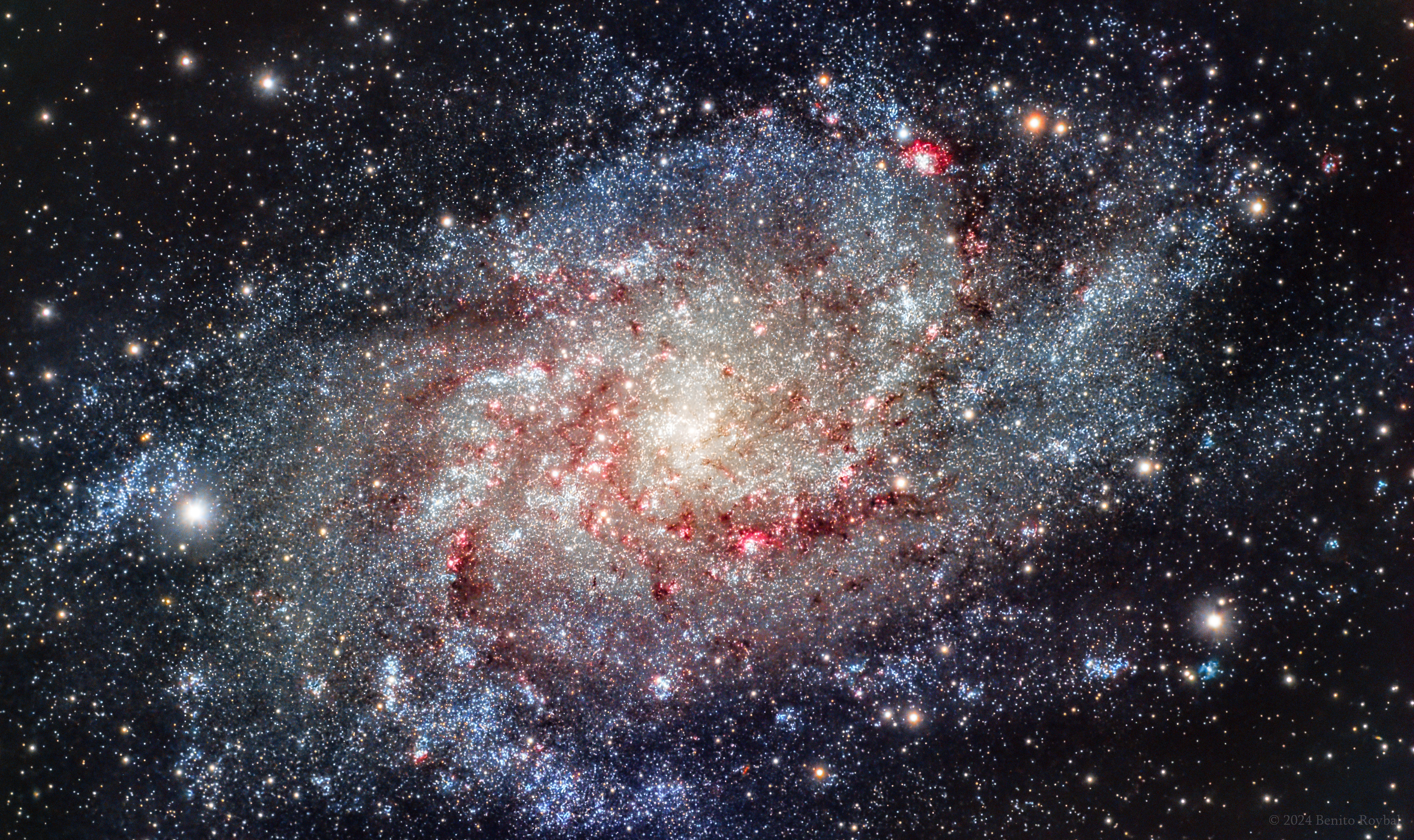
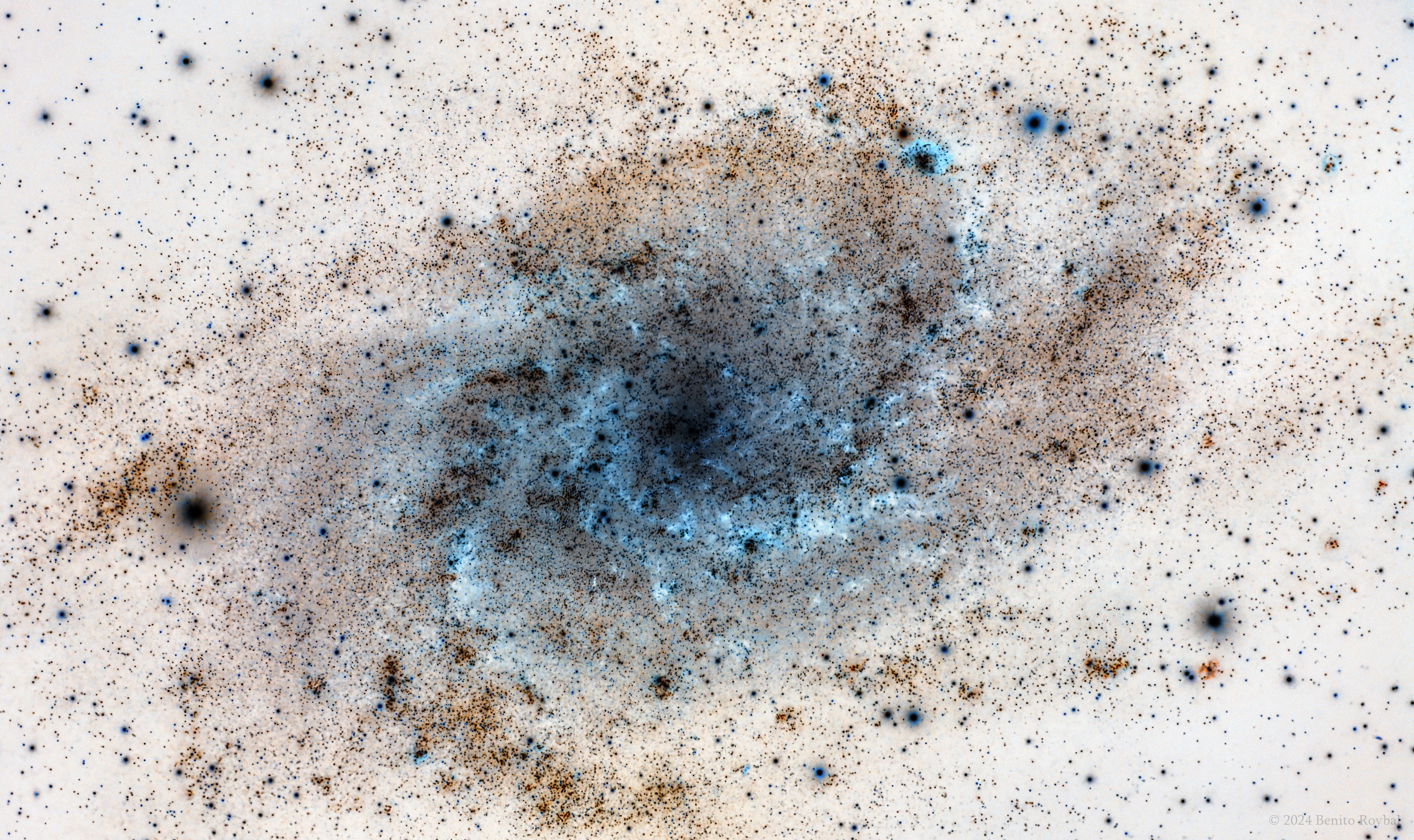
Messier 33 is a stunning face-on spiral galaxy. While it is smaller than the Milky Way and Andromeda, it is incredibly active. It contains NGC 604, one of the largest known H II regions in the entire Local Group—a massive nebula where new stars are being born at a furious rate. Because it lacks a large central bulge, M33 has a 'flocculent' appearance, meaning its spiral arms look patchy and disconnected compared to the grand-design spirals. It is likely a distant satellite of the Andromeda Galaxy, bound to it by gravity.
Imaging Challenges
- • Low surface brightness: Despite its size, M33 is diffuse and easily washed out by light pollution.
- • Revealing the H-alpha pockets: To truly capture the character of M33, narrowband data is often blended to highlight the red nebulosity in the arms.
- • Color balance: Ensuring the transition from the yellowish old stars in the center to the deep blue young stars in the arms remains natural.
If you were located inside M33, the nebula NGC 604 would be the most dominant feature in your night sky, appearing 100 times larger than the Orion Nebula appears to us.