
Our Galactic Neighbor on a Collision Course
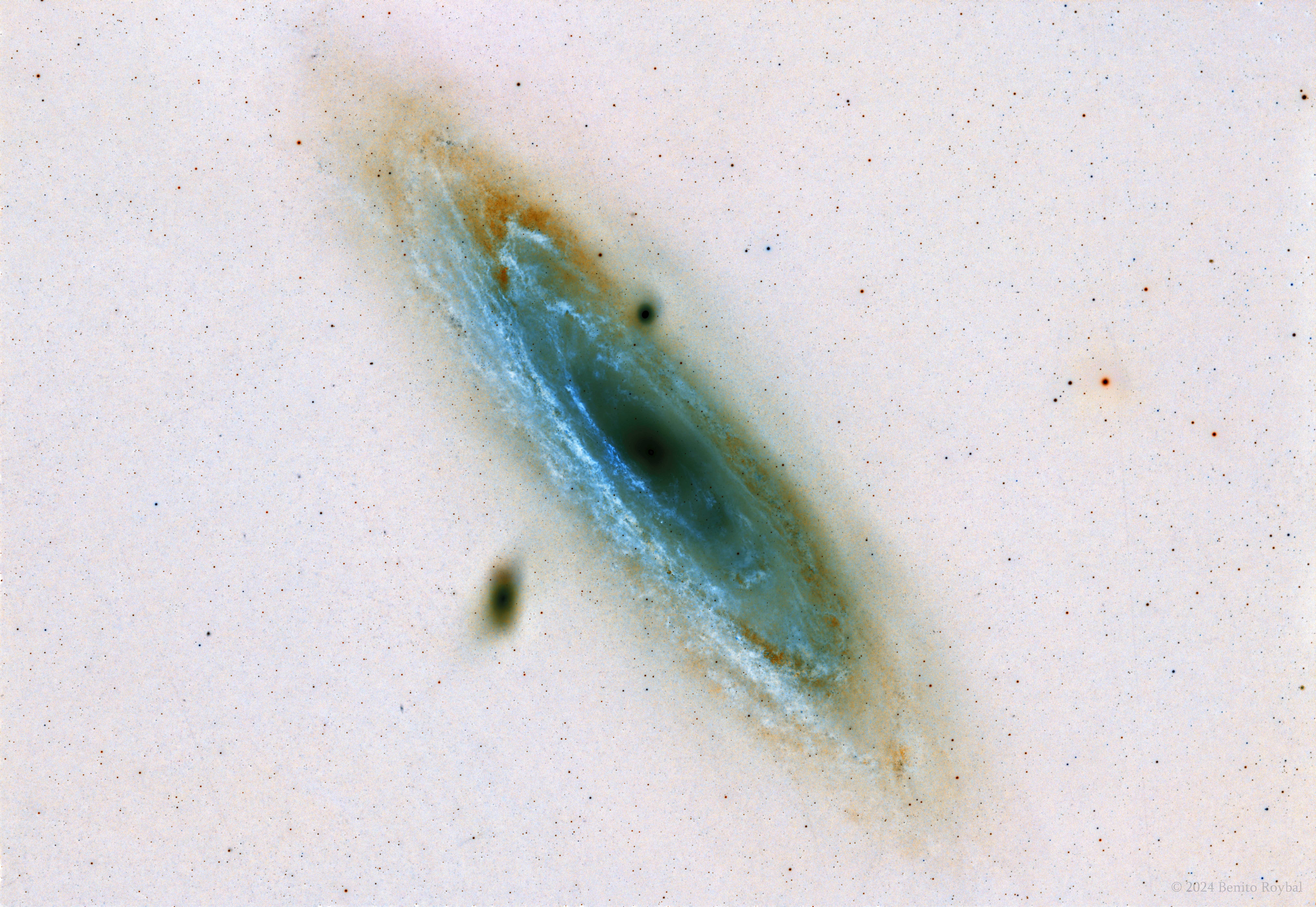
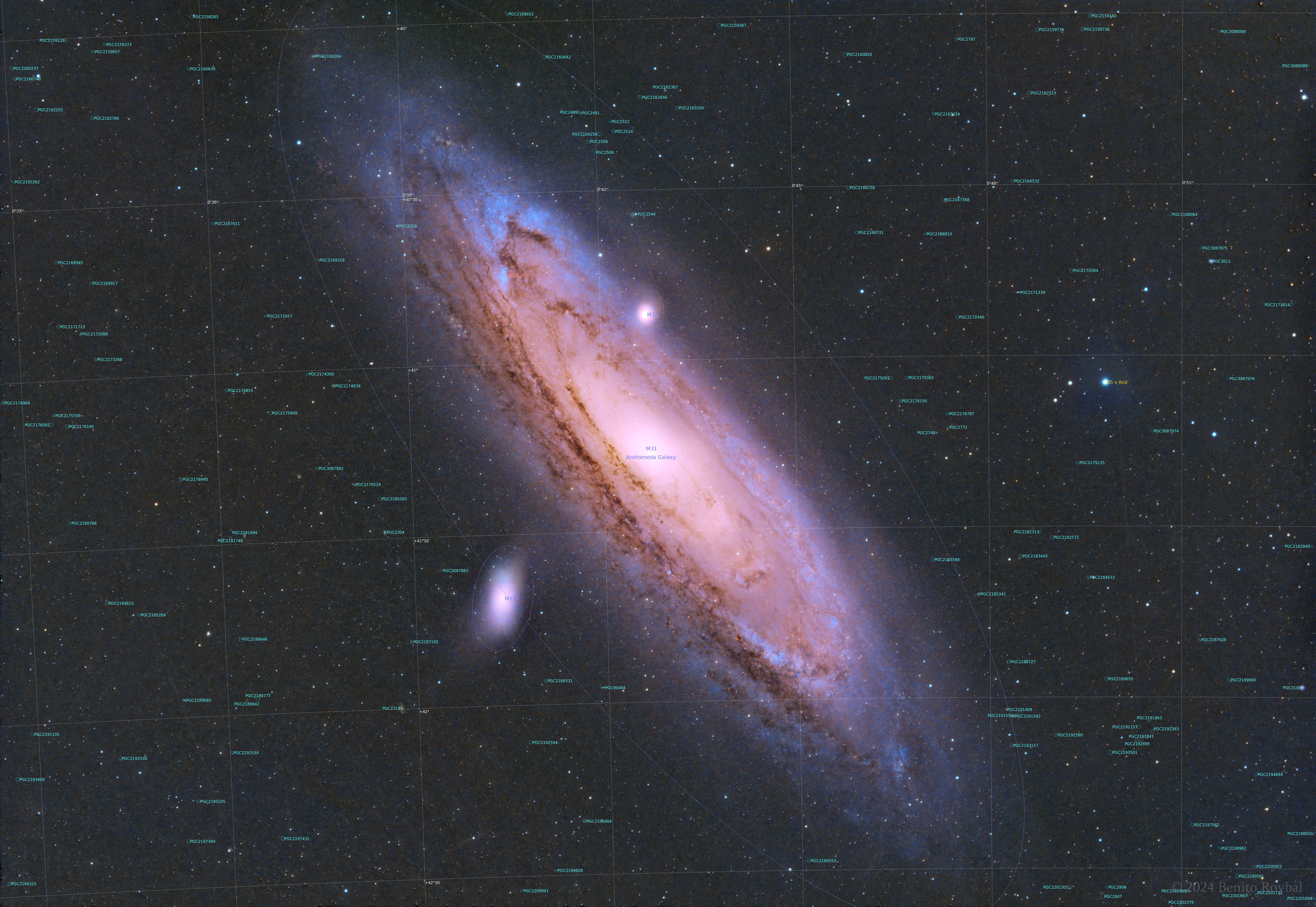
Andromeda is the largest galaxy in the Local Group and is currently hurtling toward the Milky Way at 110 kilometers per second. In about 4 billion years, the two will merge to create a giant elliptical galaxy. Even with the naked eye from a dark site, M31 appears as a faint smudge; through a telescope, its intricate dust lanes and massive star-forming regions (like NGC 206) become visible. It is flanked by two satellite elliptical galaxies, M32 and M110, which are easily captured in the same frame.
Imaging Challenges
- • Managing the extreme dynamic range: the core is incredibly bright, while the outer spiral arms are quite faint.
- • Capturing the subtle blue hues of the outer star-forming regions without losing the warm yellow glow of the ancient core.
- • Framing: At over 3 degrees wide, M31 requires a very wide field of view to avoid cutting off the 'tips' of the spiral arms.
Andromeda contains roughly one trillion stars, more than double the estimated 200–400 billion stars in our own Milky Way.