
A Galaxy with Hidden Arms
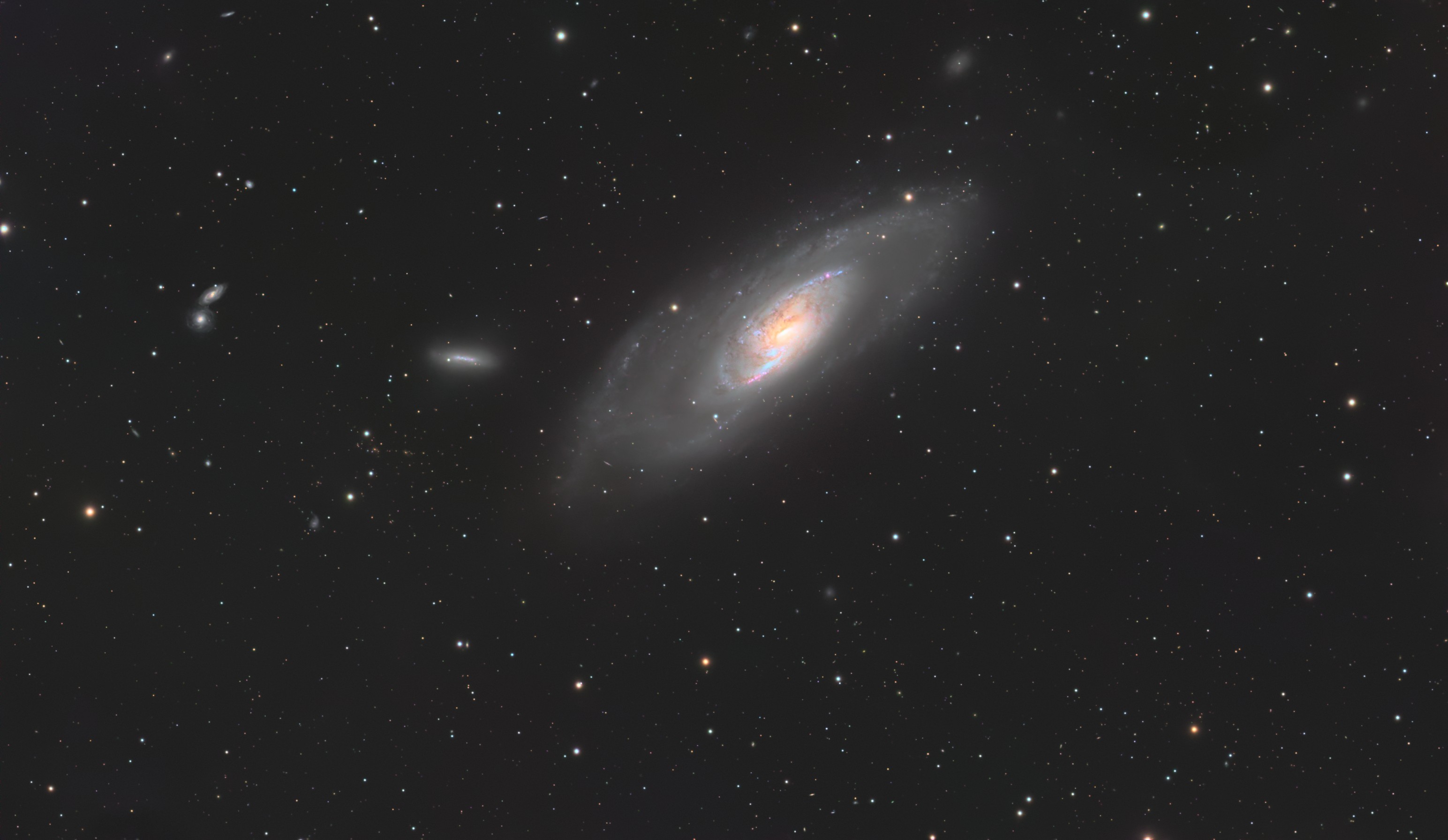
M106 is a majestic spiral galaxy, but it hides a violent secret. While it has two primary spiral arms filled with stars, it also possesses two 'anomalous' arms made of hot gas. These extra arms are caused by a supermassive black hole at the center that is actively devouring matter and blasting out jets of energy. These jets shock the gas in the galaxy's disk, causing it to glow in H-alpha light. It is a rare bridge between a 'normal' spiral galaxy and a high-energy active galaxy.
Imaging Challenges
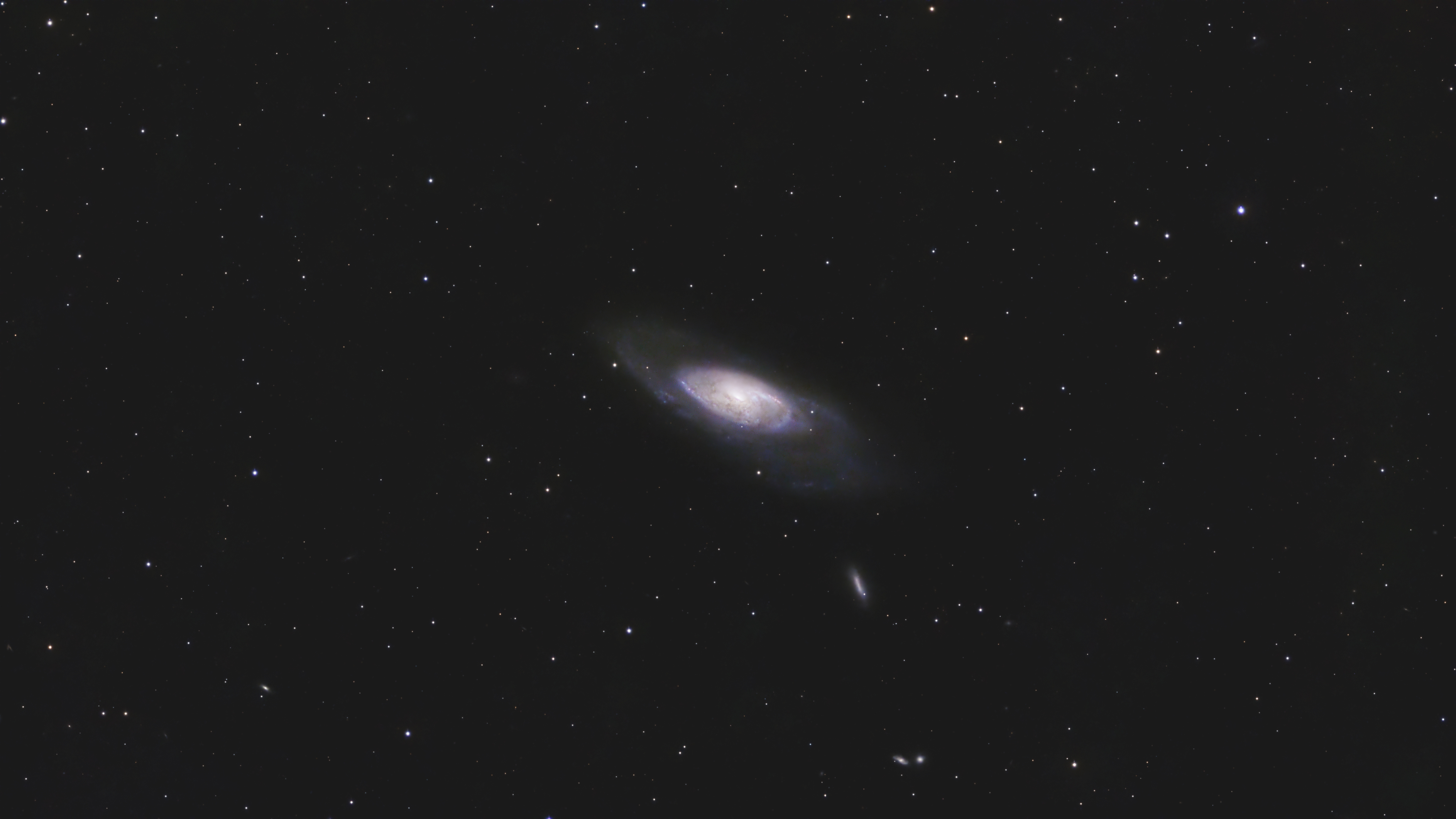
- • Capturing the Red Arms: The anomalous arms are almost exclusively visible in H-alpha. Without adding filtered data, they will be nearly invisible in a standard RGB image.
- • Small Target Scale: While large for a galaxy, it is much smaller than the nebulae you’ve been shooting. Perfect collimation on your 130HNT is vital for resolving the dust lanes.
- • Background Galaxies: The area around M106 is teeming with tiny, distant background galaxies. Preserving these while managing noise is a balancing act.
M106 is roughly the same size and luminosity as the Andromeda Galaxy (M31).