A Colossal Spiral in the Great Bear
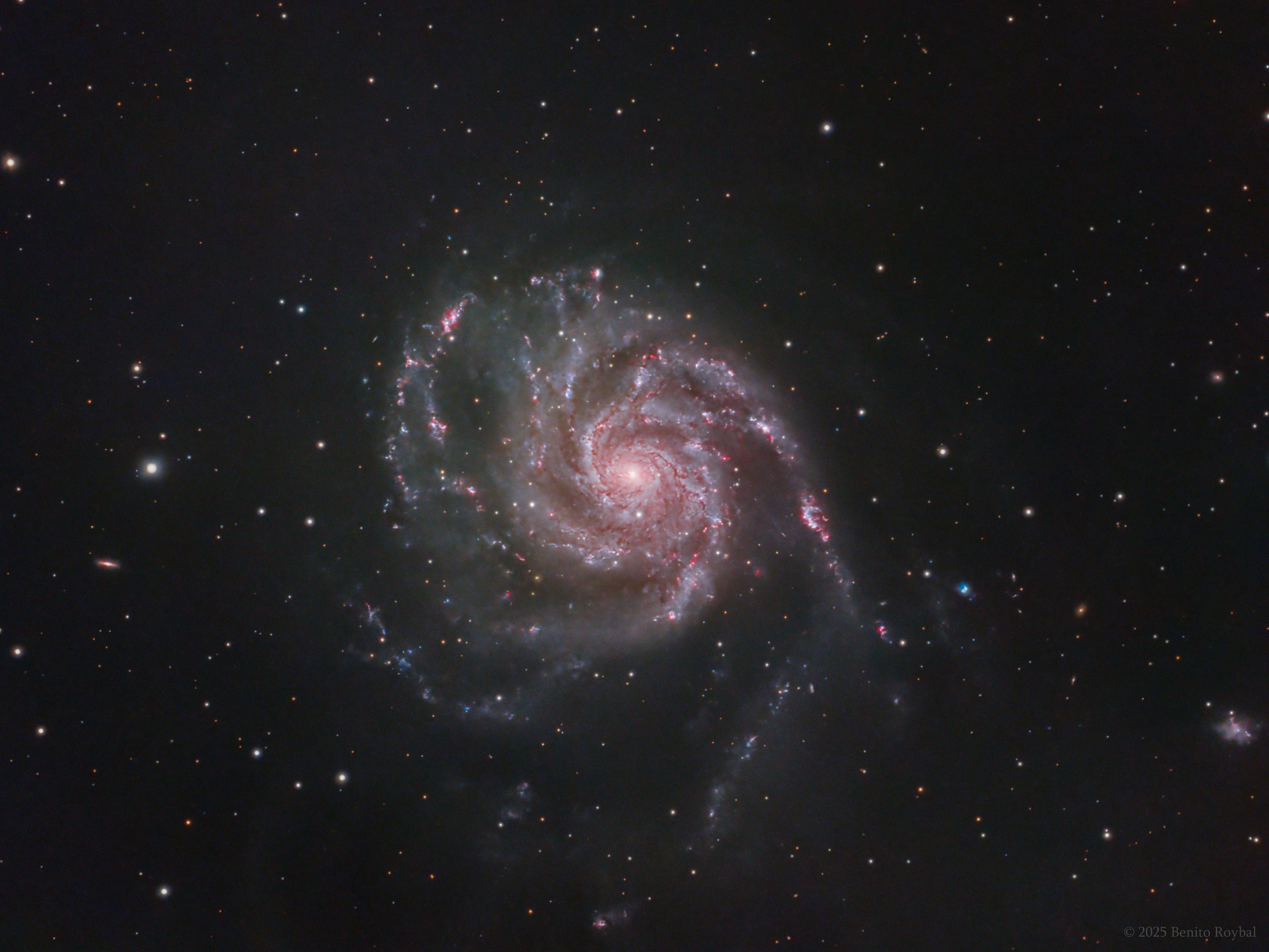
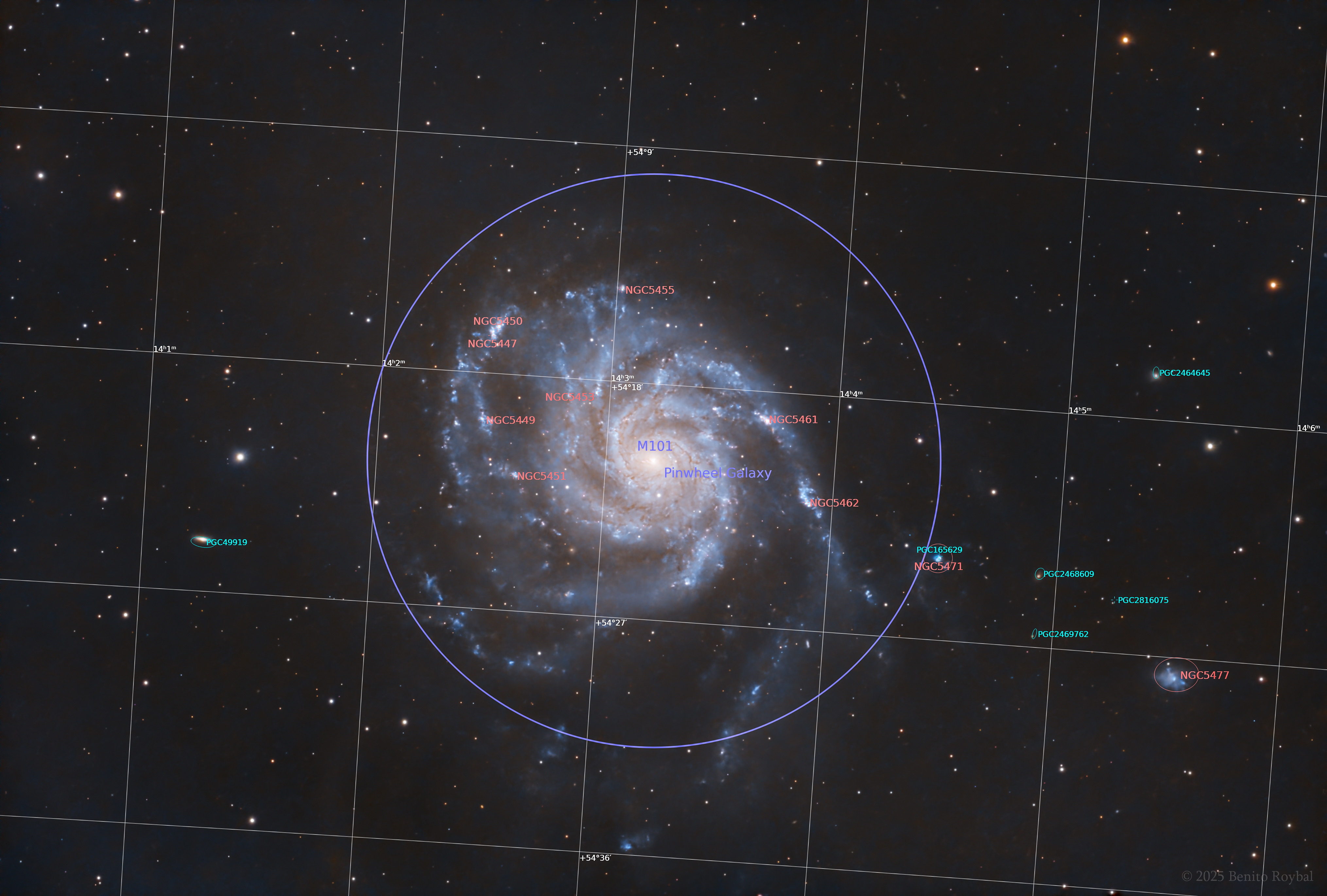
Messier 101 is a massive galaxy, spanning over 170,000 light-years across. It is famous for its 'asymmetry'—its core is noticeably offset from the center of its spiral arms, likely due to past gravitational interactions with its smaller neighbor galaxies. M101 is exceptionally rich in HII regions (nebulae where stars are born), many of which are so large and bright they have their own NGC catalog numbers. In 2023, it captured the world's attention when a massive Type II supernova, designated SN 2023ixf, erupted in one of its spiral arms, becoming the brightest supernova seen in a decade.
Imaging Challenges
- • Low Surface Brightness: While the galaxy is large, its light is spread over a huge area, making the outer arms very difficult to pull out of the noise.
- • Color Balance: The arms are dominated by young blue stars, while the HII regions require careful H-alpha blending to glow red without looking artificial.
- • Processing Asymmetry: Ensuring the lopsided nature of the galaxy looks natural and not like a framing or tracking error.
M101 contains approximately one trillion stars, and its HII regions are among the largest and most intense in the known universe.