A Viking Ship in the Deep Sky
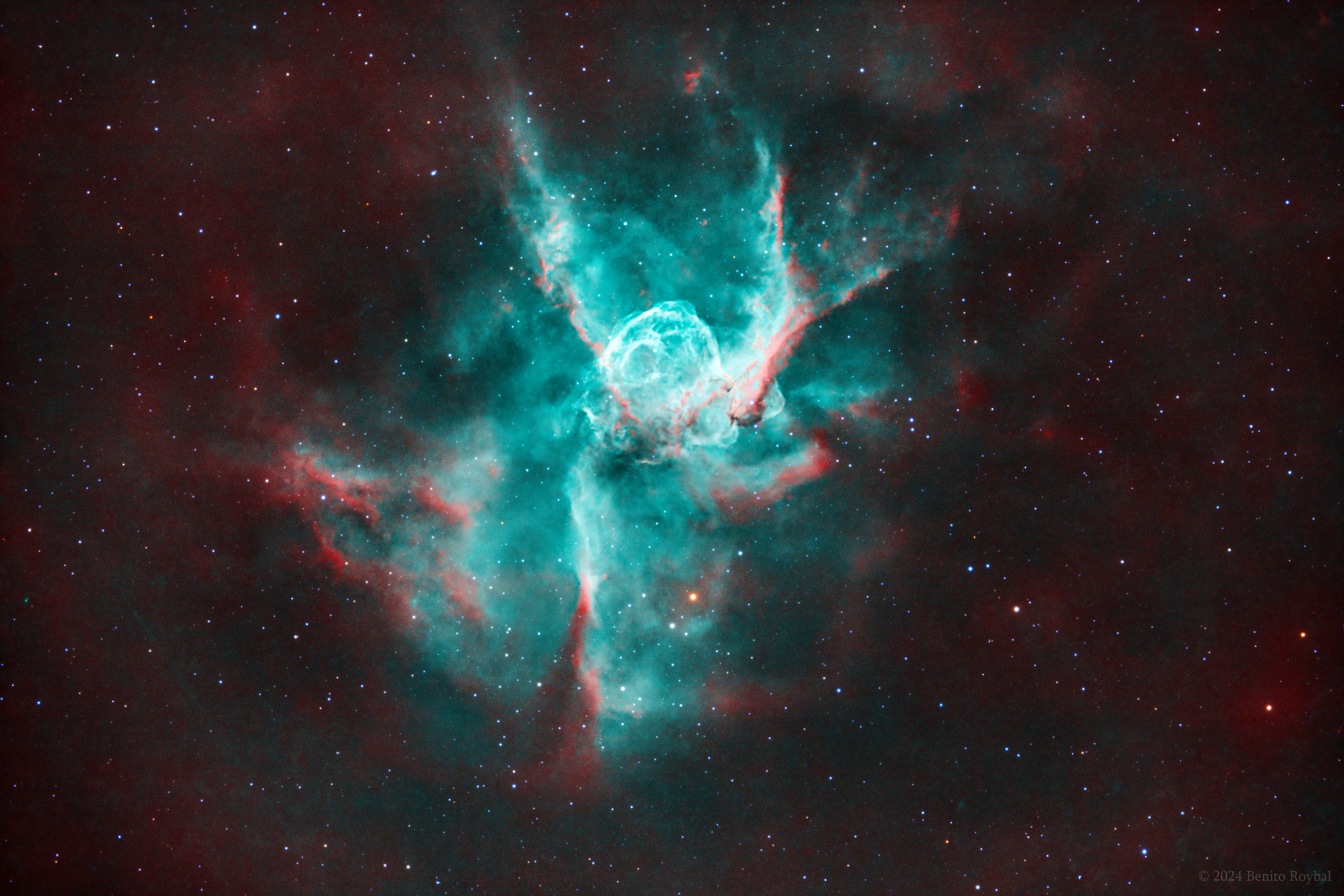
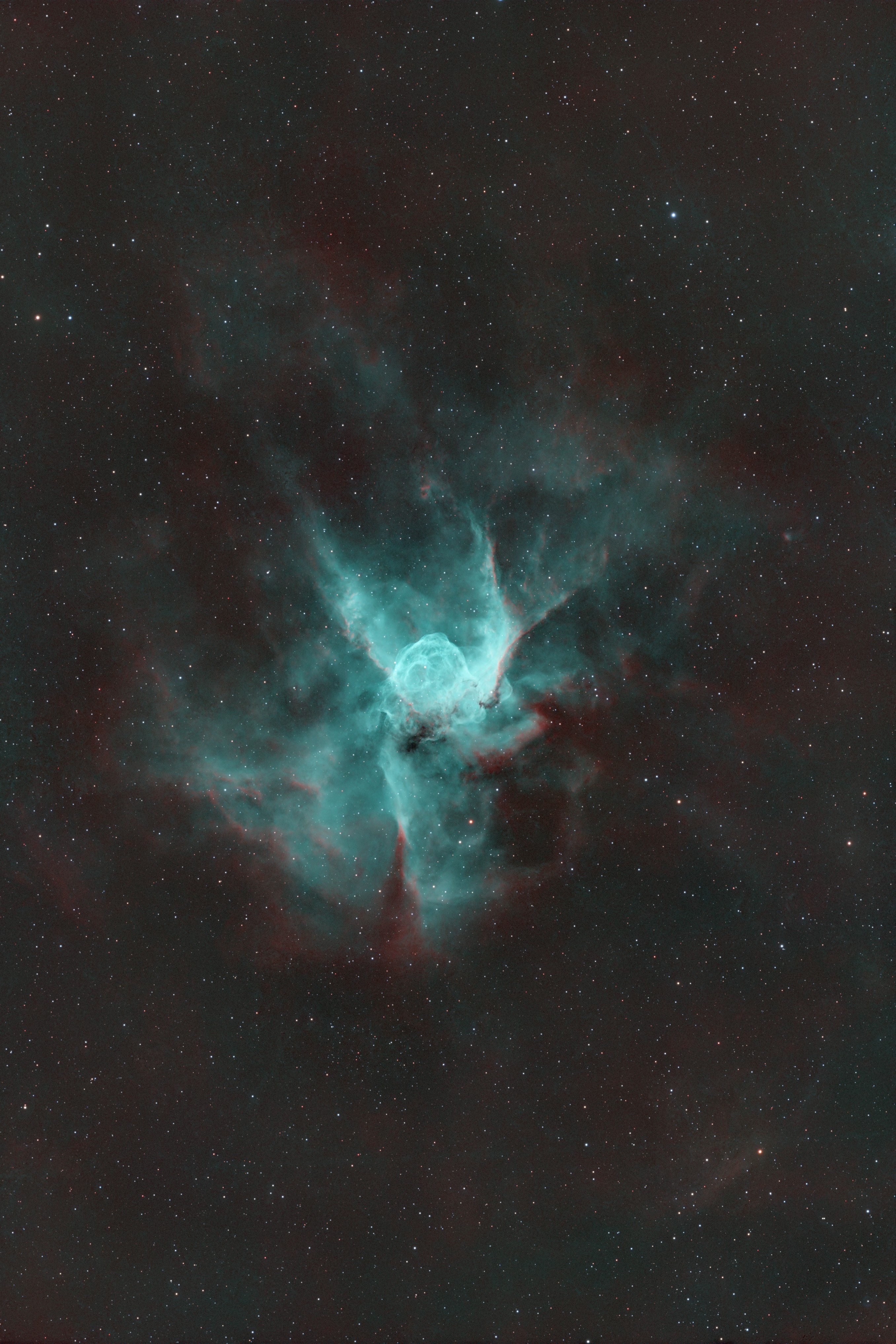
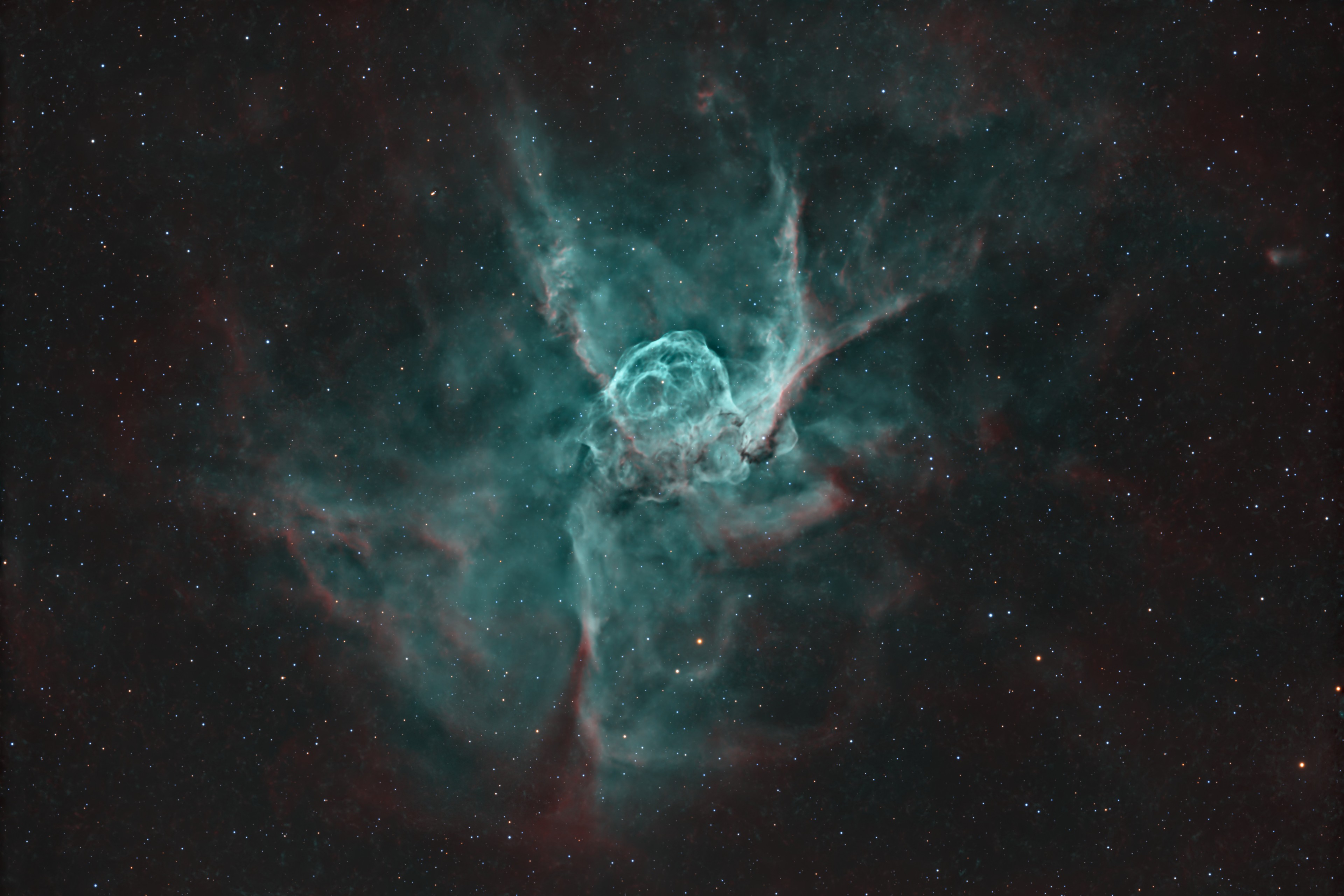
Thor's Helmet is a massive bubble of interstellar gas, approximately 30 light-years across. The central star, WR 7, is an extremely hot giant in the final stages of its life. As it sheds its mass, its high-speed stellar winds collide with a nearby molecular cloud, creating the 'horns' or 'wings' that give the nebula its name. The interaction with the surrounding dense gas causes the nebula to expand in a non-uniform way, resulting in its complex, asymmetric shape.
Imaging Challenges
- • Atmospheric Dispersion: Since it sits low in Canis Major for many observers, you may deal with more atmospheric turbulence (seeing) than with overhead targets.
- • Color Balance: The Oxygen (OIII) signal is remarkably strong here, often rivaling the Hydrogen. Balancing the teal wings with the red core is a creative challenge.
- • Internal Filaments: The 'bowl' of the helmet contains very fine, overlapping shockwaves that are easily blurred by over-processing.
The central star is so hot (roughly 100,000 Kelvin) that it is over 280,000 times more luminous than our Sun.