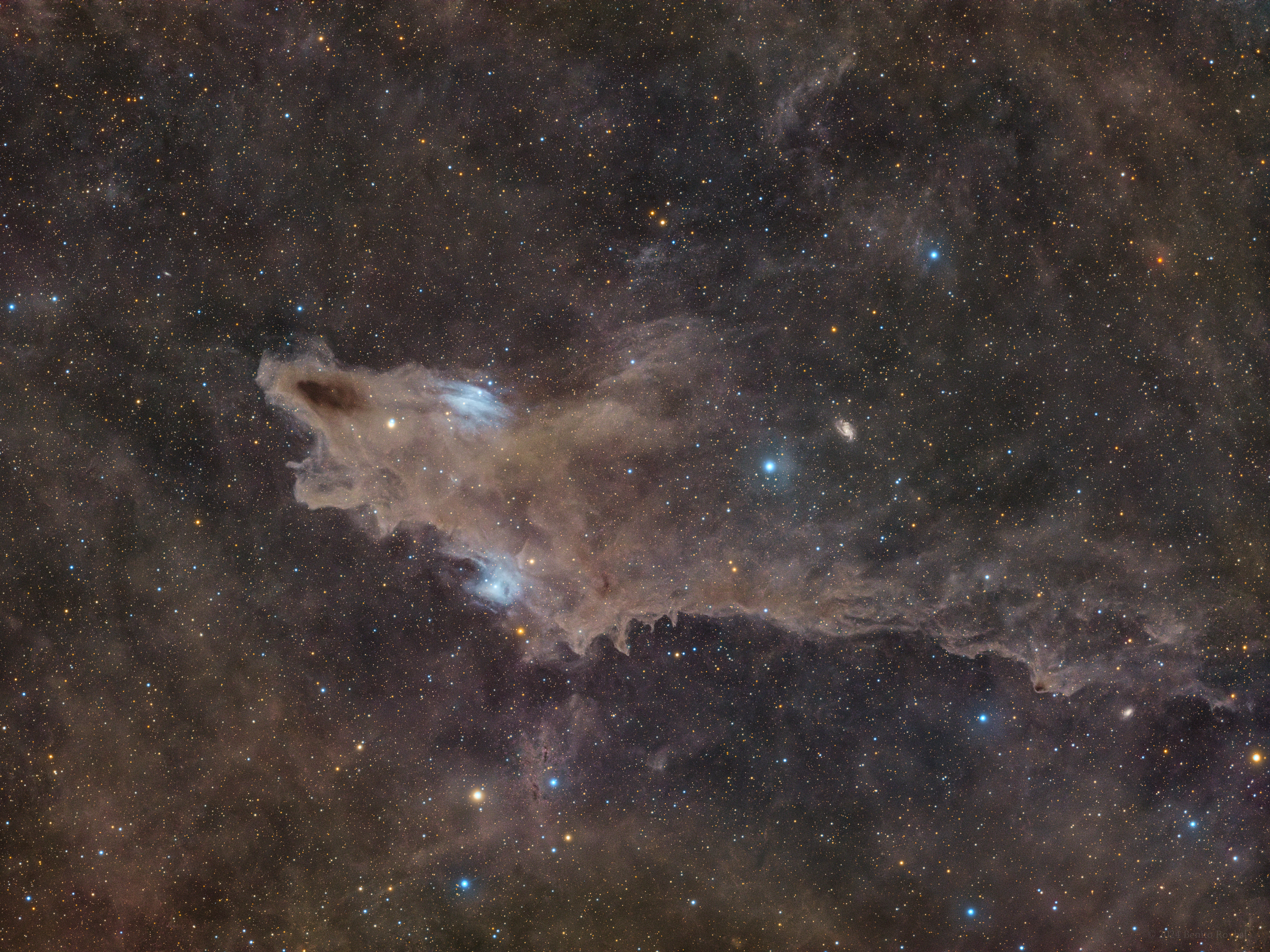
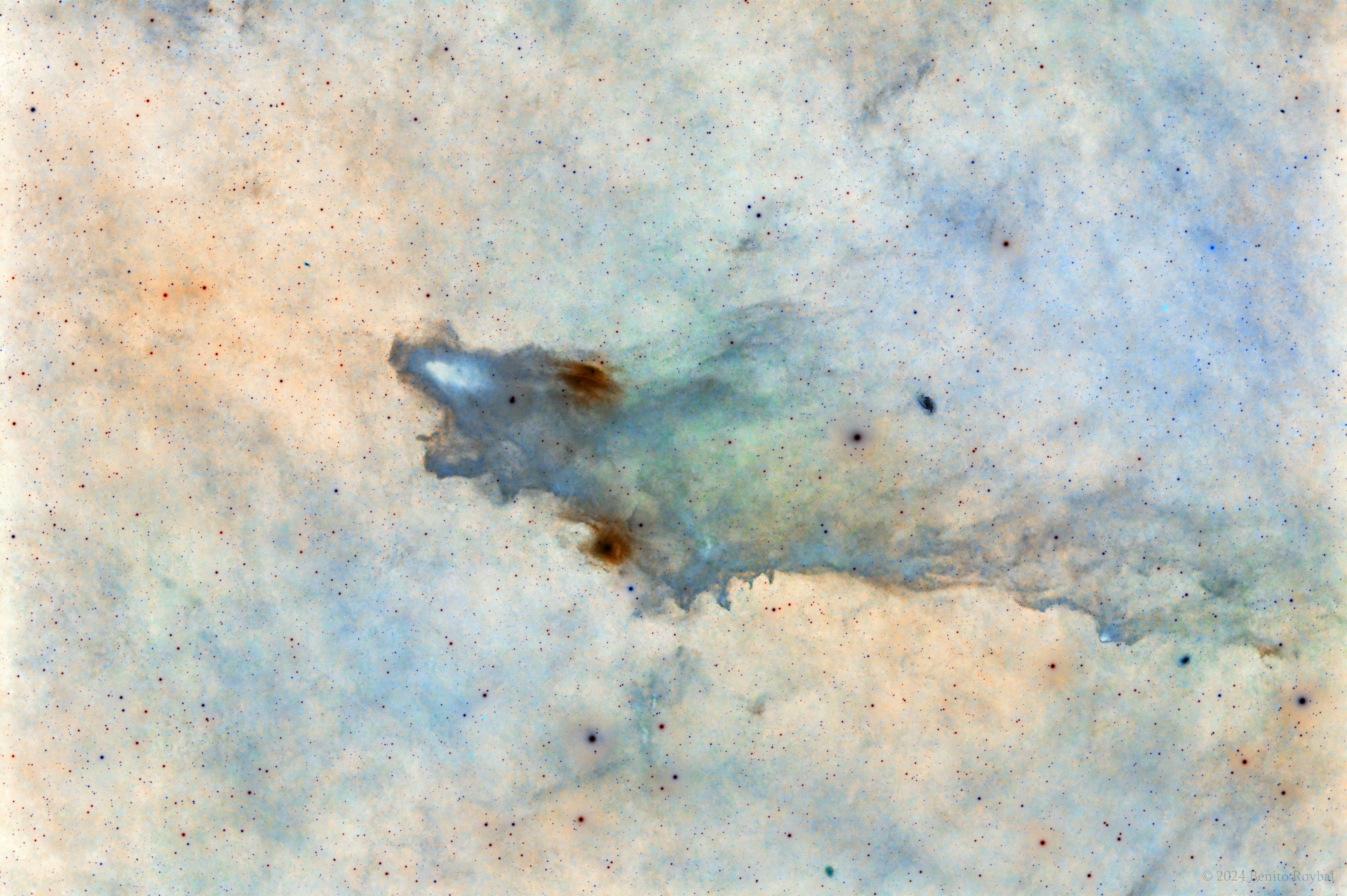
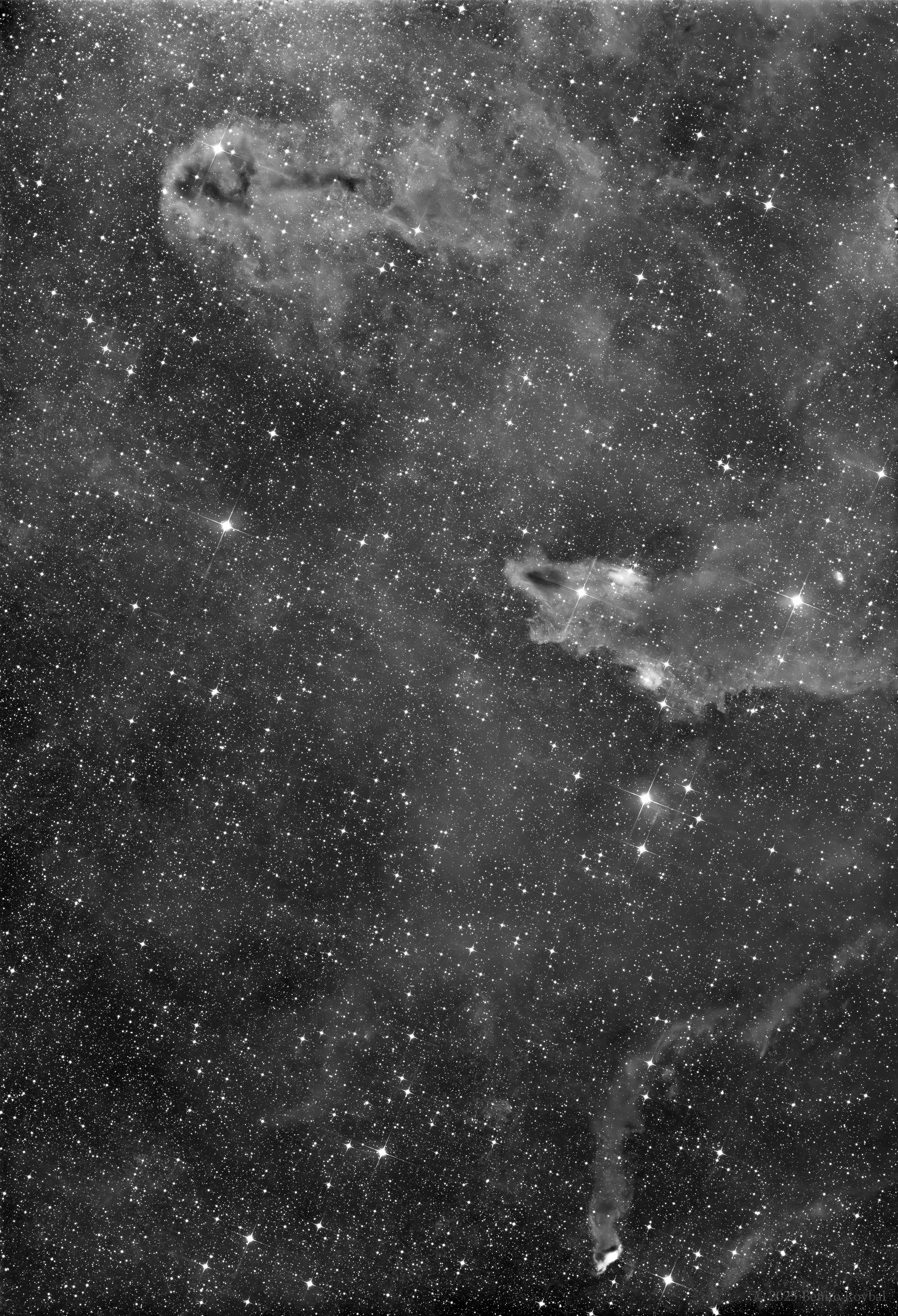
A Celestial Predator in the High North
The Shark Nebula is a part of a much larger complex of interstellar dust. It is a 'dark nebula,' meaning it is composed of cold, dense molecular gas that obscures the light of the stars behind it. However, the Shark is also home to two blue reflection nebulae: VdB 149 and VdB 150, which form the 'eye' and 'gill' areas. These regions glow because of the light from embedded stars reflecting off the dust grains. In very deep exposures, you can see that the Shark is actually swimming through the Integrated Flux Nebula (IFN)—extremely faint dust illuminated by the collective light of our entire galaxy.
Imaging Challenges
- • Contrast Management: The 'Shark' is only slightly darker than the 'water' (the surrounding IFN/space), requiring a very clean background and perfect flat frames.
- • Color Calibration: Because there is no strong emission signal, getting the star colors and the subtle blue reflection areas correct is vital.
- • Noise: Since you are stretching the background so hard to see the dust, noise in the shadows can quickly become a problem.
The Shark Nebula is physically part of the Cepheus Flare, a massive complex of dust and gas that stands about 650 light-years away, well above the plane of our galaxy.