A Cosmic Bird in Flight
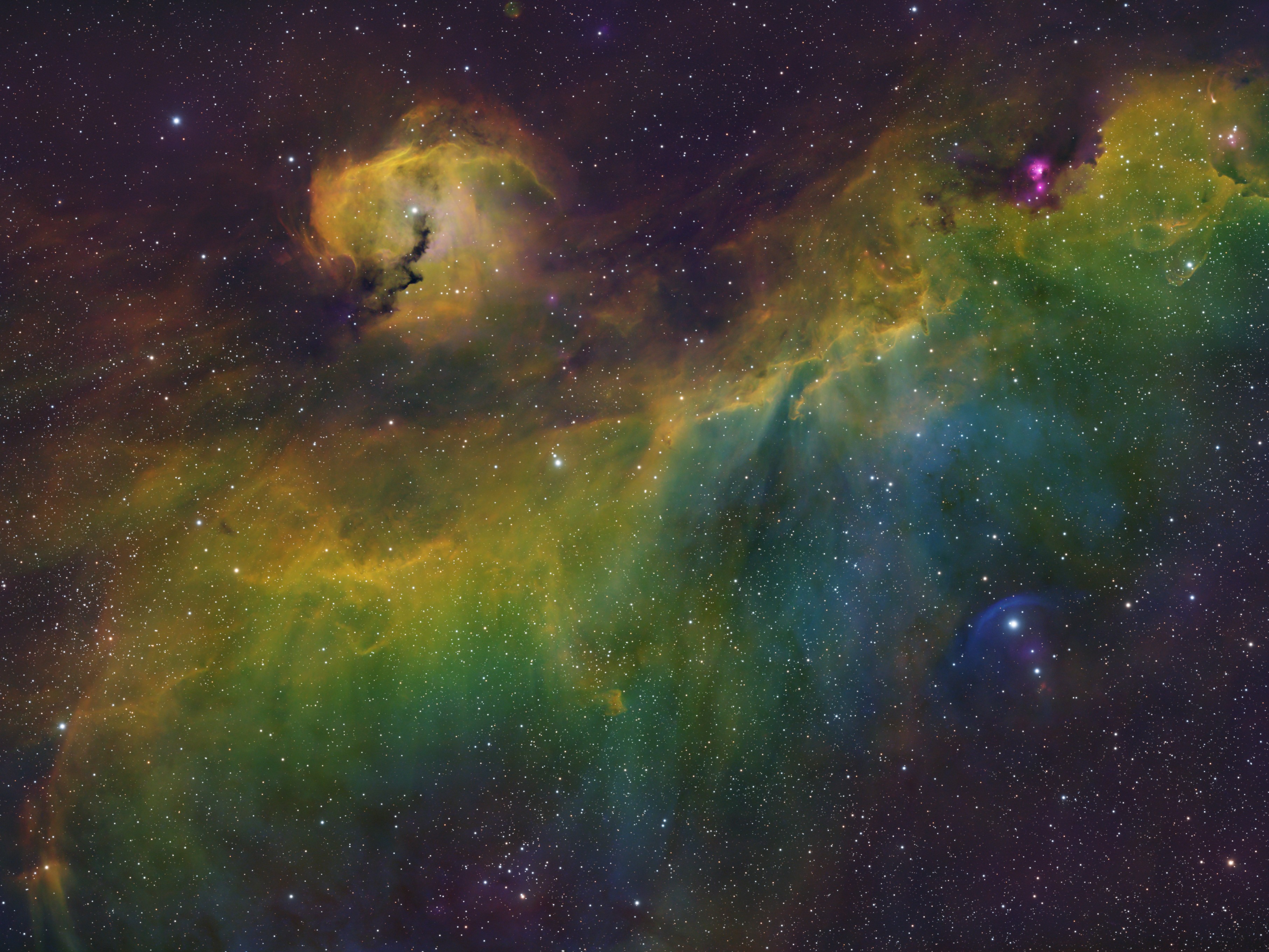
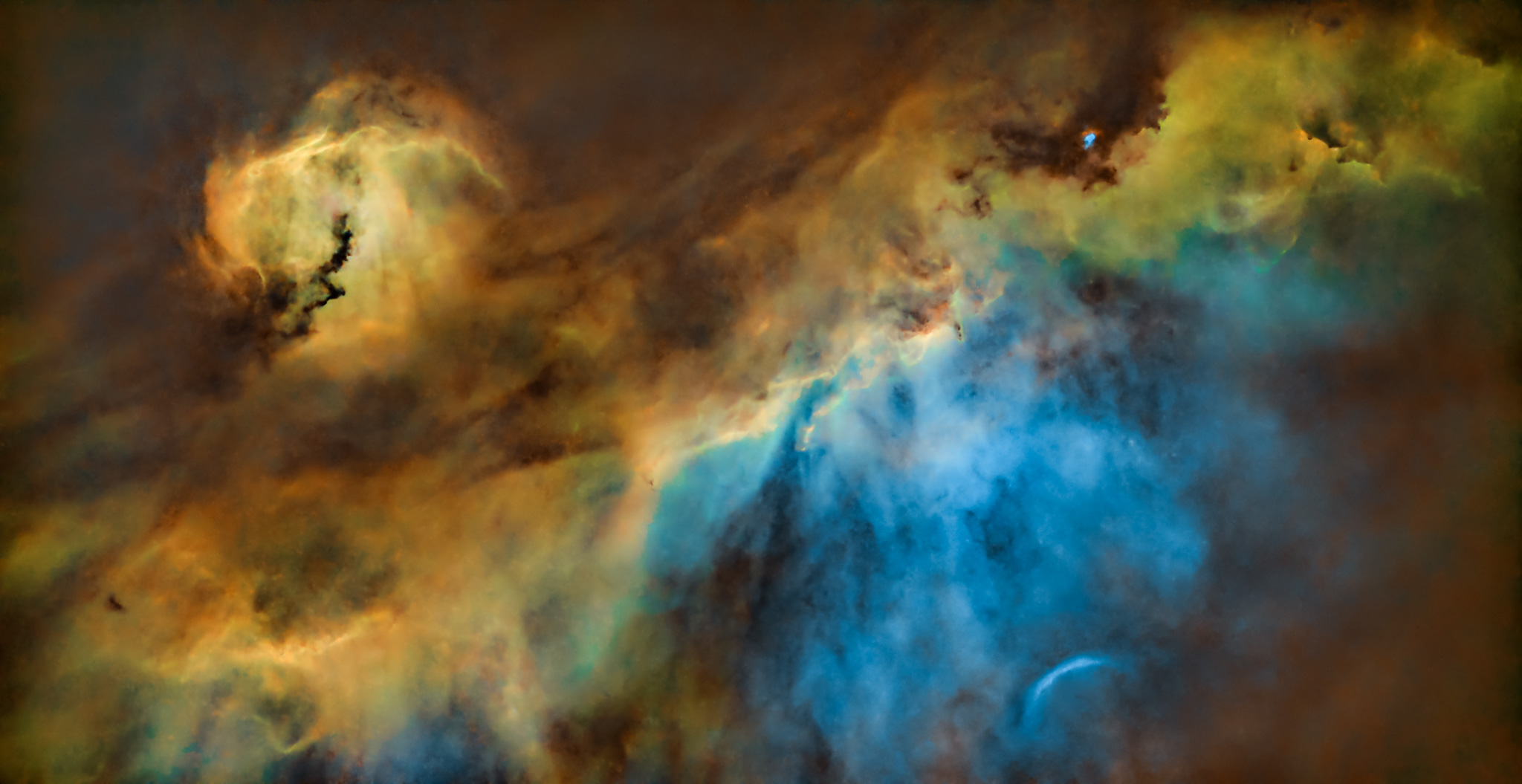
Spanning across the border of Monoceros and Canis Major, the Seagull Nebula is a massive complex of gas, dust, and newborn stars. Its distinctive silhouette closely resembles a bird in mid-flight, with its 'wings' spanning over 100 light-years across. The head of the seagull is designated separately as NGC 2327, which contains a dense reflection component wrapped around a massive, hot star that powers much of the nebula's glow. This complex is a highly dynamic stellar nursery, showcasing a blend of intense hydrogen-alpha emission, dark reflection lanes, and compact clusters of infant stars carving out bubbles in the interstellar medium.
Imaging Challenges
- • Capturing the full span: The wingspan of the nebula is massive, requiring either a very wide field of view or a multi-panel mosaic to frame completely.
- • Balancing emission and reflection details: Separating the heavy Red Hydrogen-alpha wing details from the subtle blue reflection data in the head requires precise color balance.
- • Faint outer wing tips: While the head and center body are bright, the structural wing tips fade quickly into the background noise, demanding high integration time.
The Seagull Nebula complex is primarily ionized by HD 53367, a massive star twenty times the size of our Sun, which sits directly inside the 'head' of the bird.