A Ghostly Drifter in the Gemini Twins
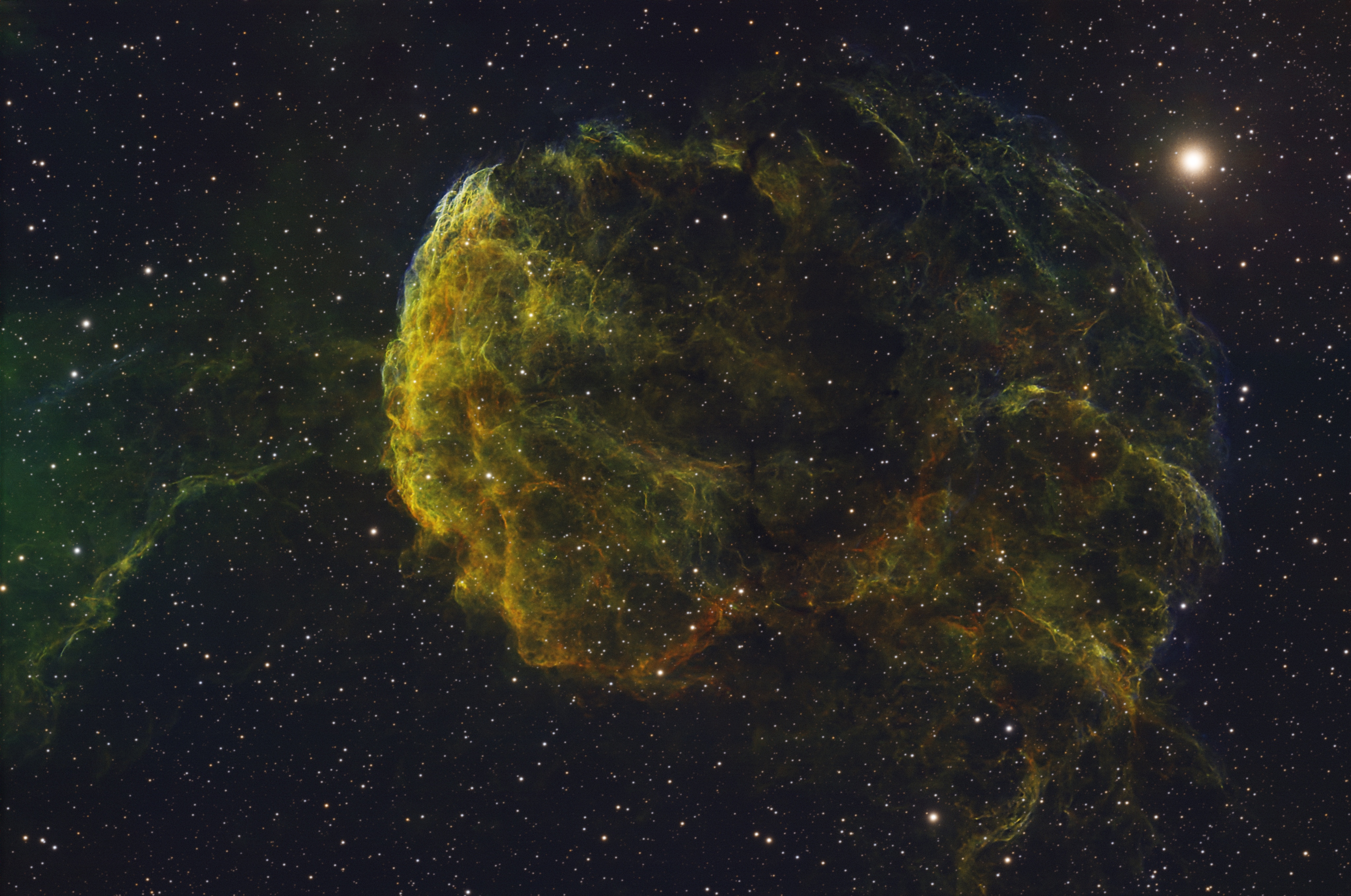
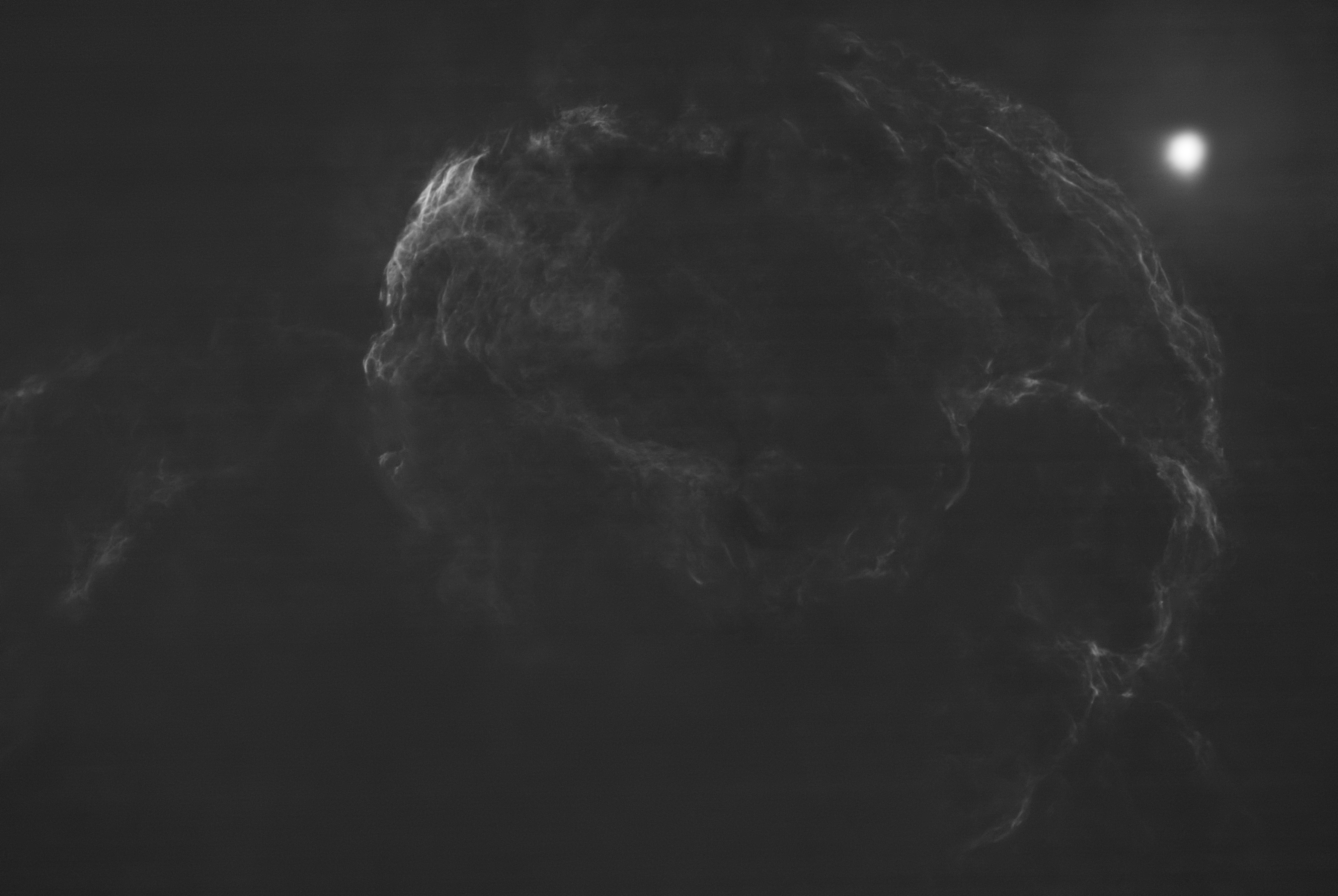
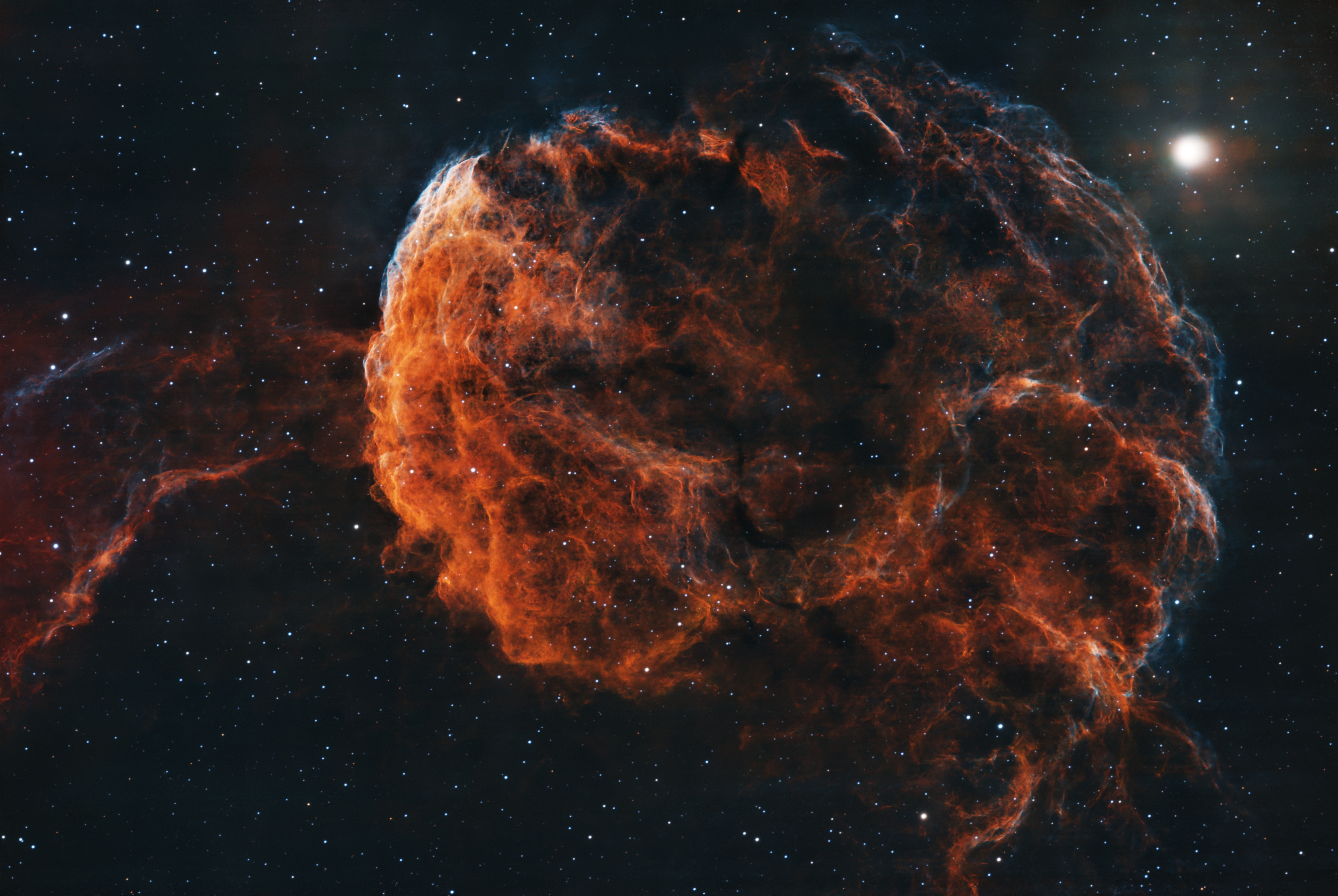
Sh2-248 is the remnant of a massive star that exploded between 3,000 and 30,000 years ago. The 'Jellyfish' appearance is caused by the supernova's blast wave slamming into a dense molecular cloud. This interaction creates the bright, curved 'head' of the nebula, while the 'tentacles' are composed of trailing filaments of ionized gas. Deep inside the wreckage lies a neutron star, the crushed core of the original star, spinning rapidly and emitting a wind of high-energy particles.
Imaging Challenges
- • The 'Propus' Problem: The bright star Propus (Eta Geminorum) sits right next to the nebula. Like Alnitak with the Flame, it can cause significant reflections and halos in fast telescopes.
- • Color Complexity: While the 'head' is bright in H-alpha, there is a very delicate, wispy OIII (Oxygen) signal in the 'tentacles' that requires deep integration to reveal.
- • Fine Filaments: The beauty of this target lies in its hair-thin structures. Achieving perfect focus and using deconvolution is necessary to avoid a 'blurry' look.
The Jellyfish Nebula is physically interacting with the same molecular clouds that gave birth to the nearby Monkey Head Nebula.