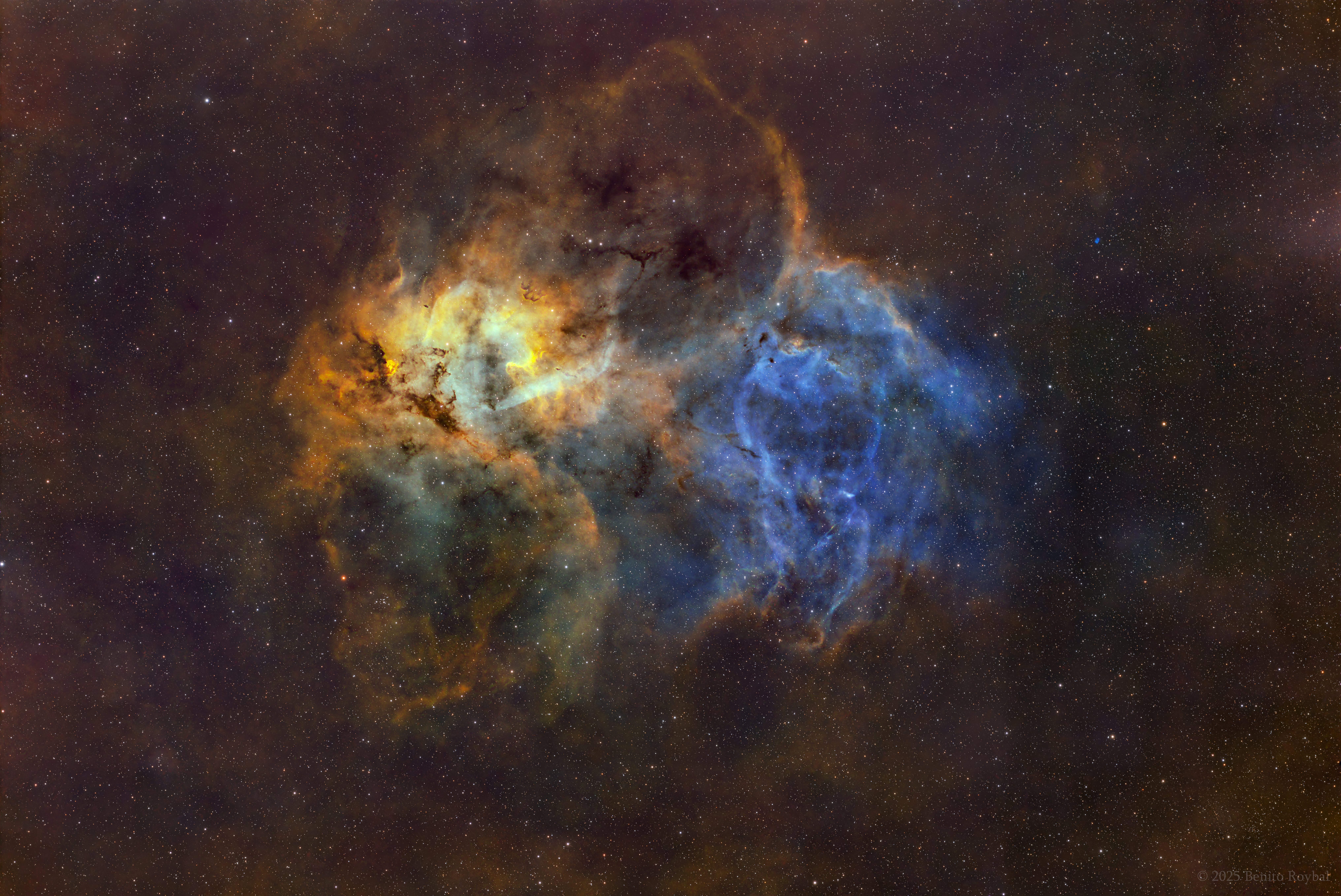
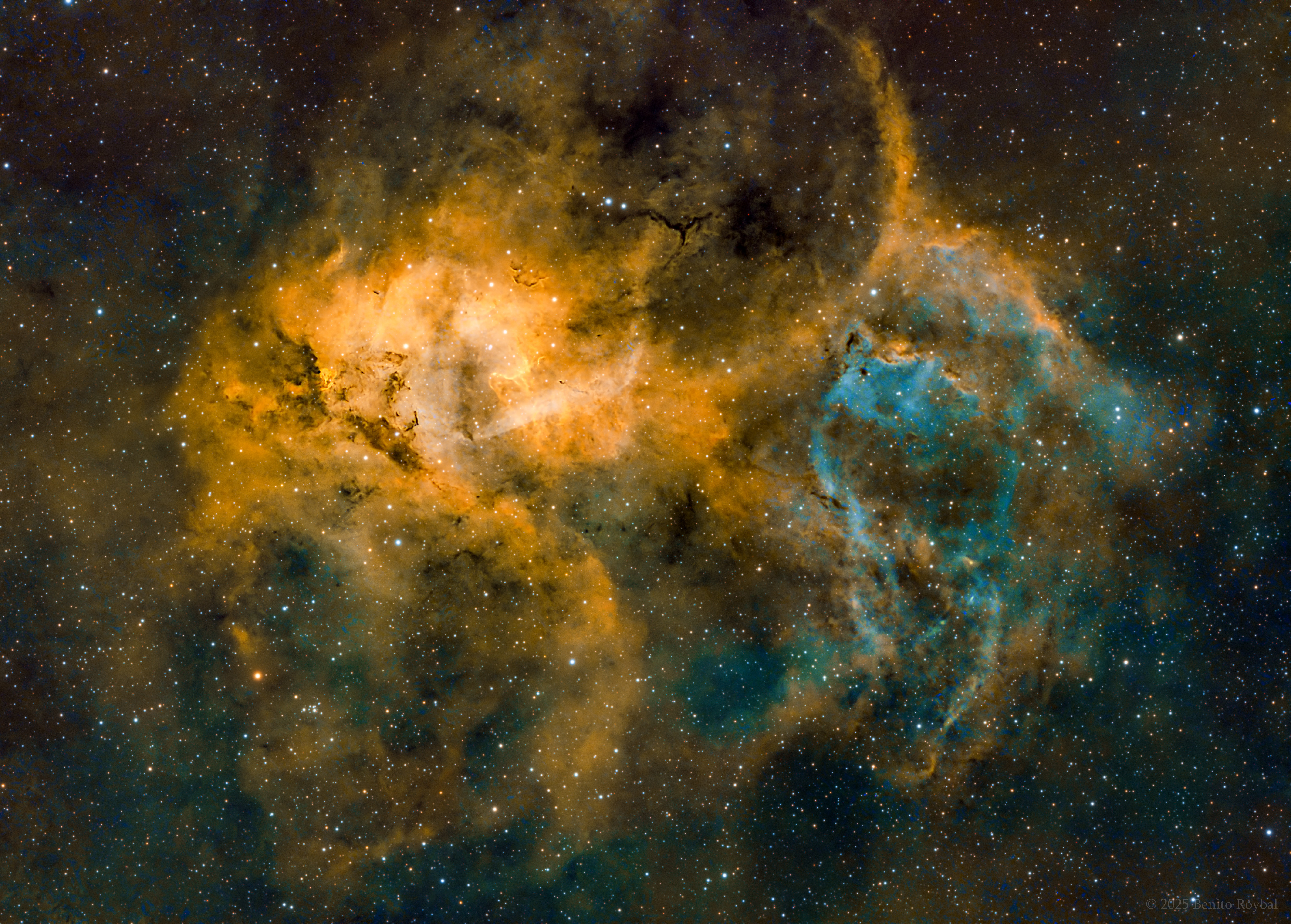
A Golden Predator in the High North
Sh2-132 is a massive HII region energized by several hot, massive stars, including two Wolf-Rayet stars (WR 152 and WR 153). These volatile stars are responsible for carving out the complex shells and bubbles seen within the nebula. The 'Lion' shape becomes most apparent when viewed in narrowband; the head and forelegs are defined by a strong Oxygen (OIII) signal, while the rest of the body consists of deep, rippling Hydrogen-alpha clouds. It is part of the Perseus spiral arm of our galaxy.
Imaging Challenges
- • Oxygen Signal: The 'head' of the lion is primarily OIII, which is much fainter than the Ha body. You need long total integration to make the lion look 'complete.'
- • Fine Detail: The nebula contains very delicate, whispy filaments that require precise deconvolution to stand out from the background.
- • Framing: It is a large target; depending on your camera's sensor size, you may need to orient it carefully to fit the entire 'tail' of the lion.
The Lion Nebula is physically enormous, spanning approximately 250 light-years from head to tail.