A Cosmic Embryo Wrapped in Dust
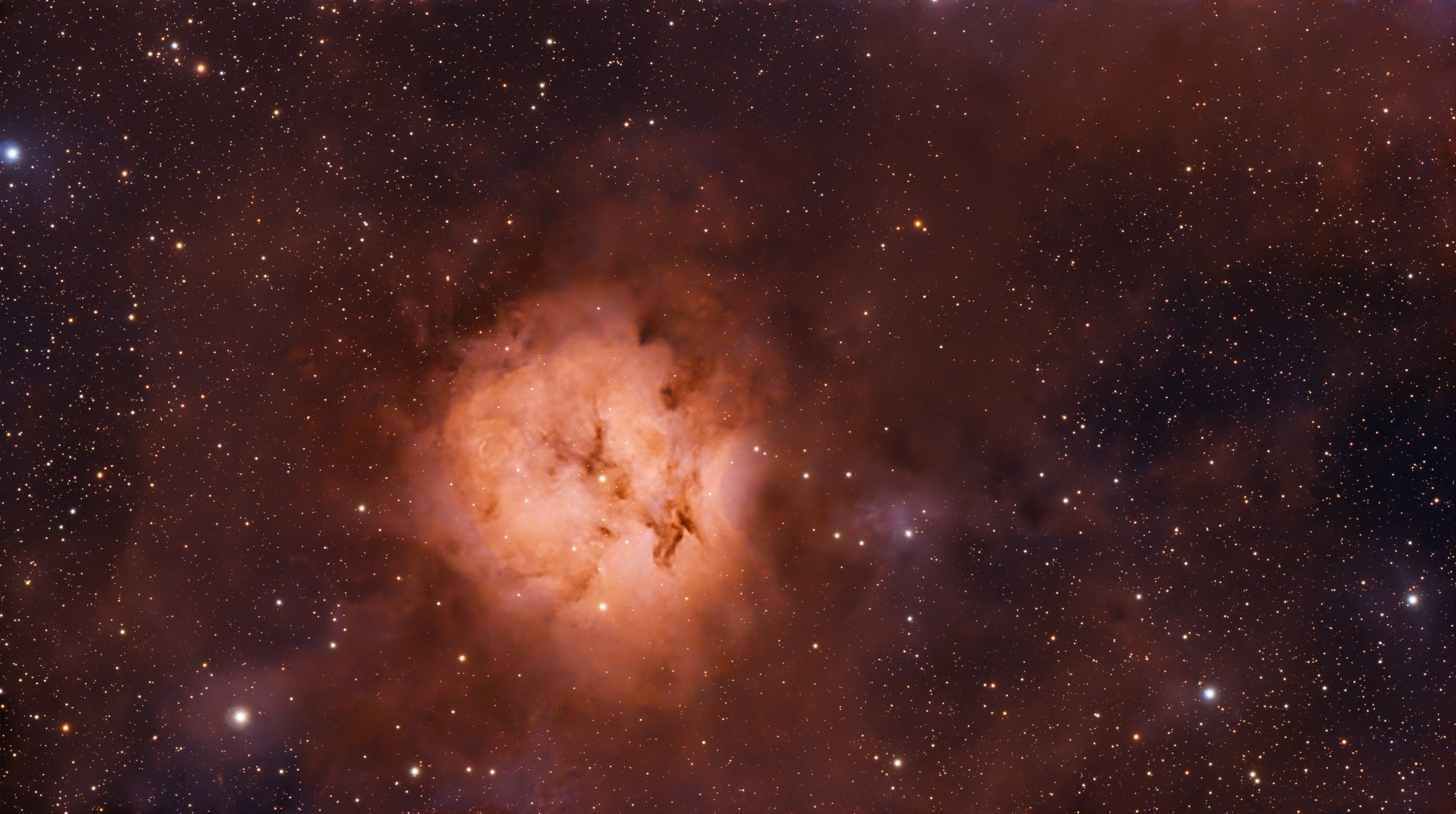
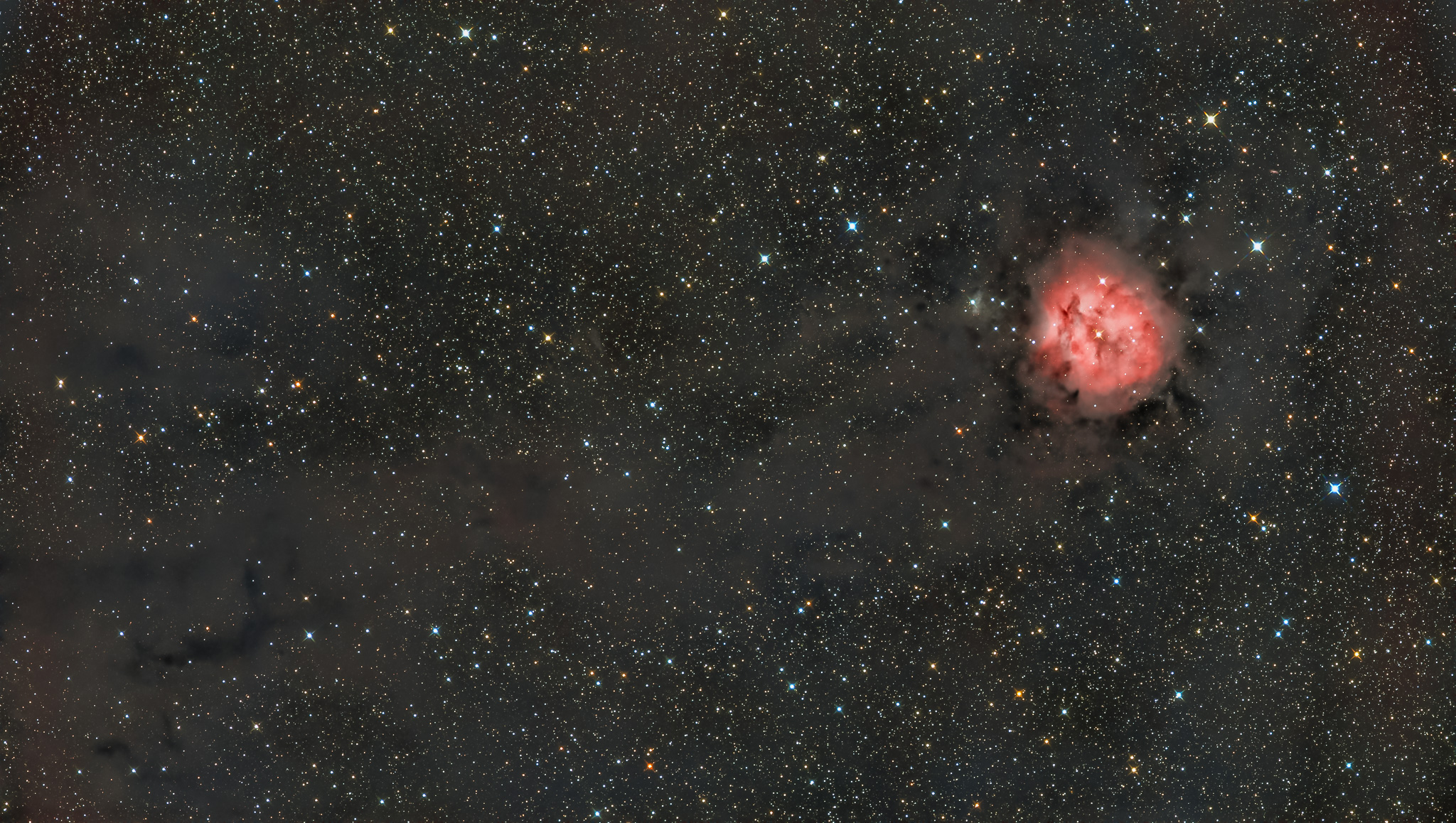
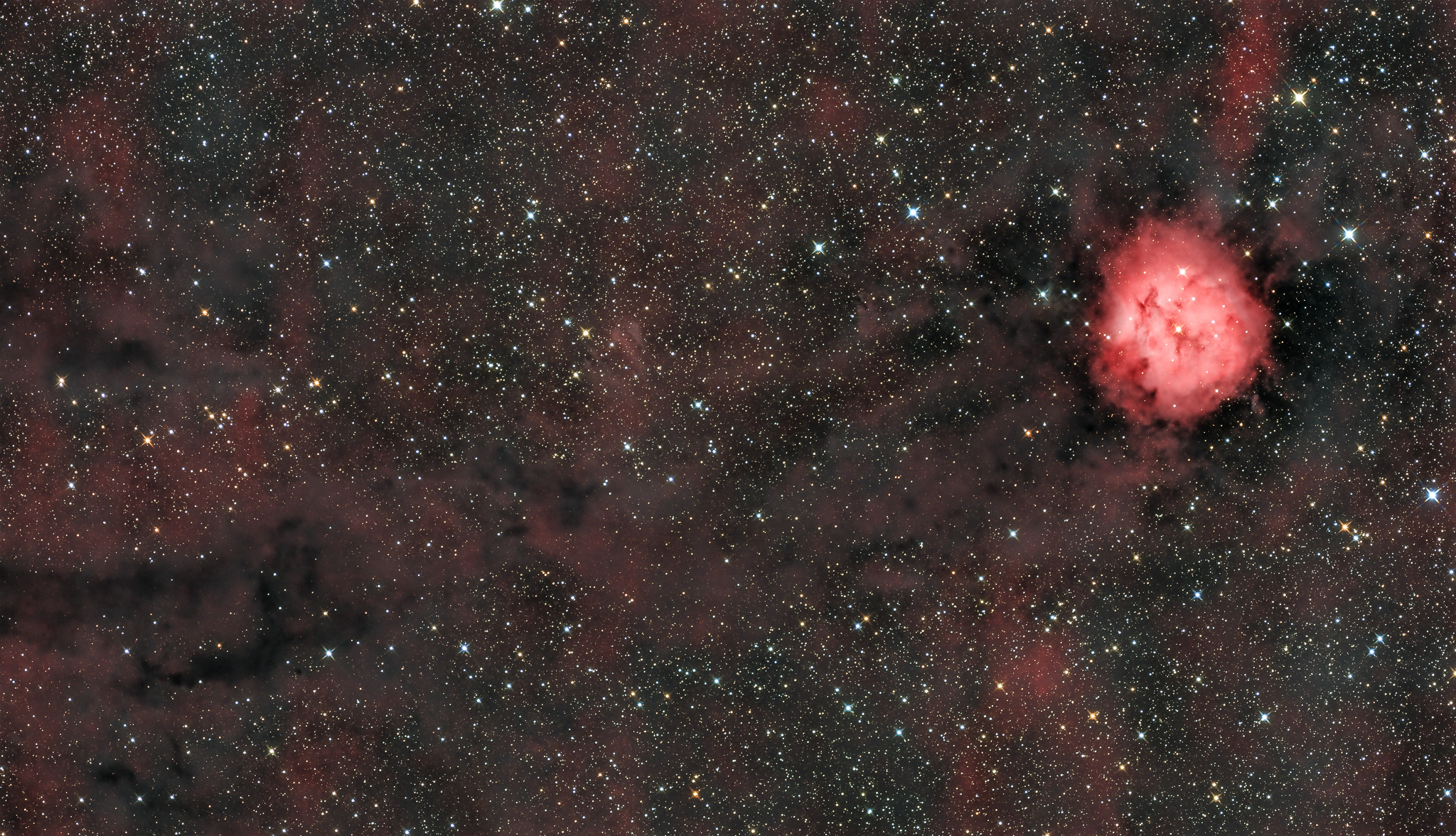
The Cocoon Nebula is a striking combination of a bright emission nebula, a blue reflection nebula, and a massive, surrounding dark absorption nebula. Located at the tail end of the long dark dust lane Barnard 168, IC 5146 represents a stellar nursery in its infancy. A single, hot, newly formed star at its center has carved out a bubble in the molecular cloud, ionizing the surrounding hydrogen gas into a deep crimson glow while simultaneously scattering its brilliant blue starlight off the dense outer dust envelope.
Imaging Challenges
- • Revealing the dark nebula stream: Capturing the pitch-black tendrils of B168 requires clean background extraction to separate it from the rich star fields of Cygnus.
- • Preserving delicate color transitions: Balancing the stark red emission core with the subtle, outer blue reflection fringes demands precise color separation during stretching.
- • Managing tiny pixel scales: Pairing the fine pixels of the Uranus-C with the focal length of the Askar 120APO requires tracking accuracy to avoid oblong stars.
The central star responsible for lighting up the entire Cocoon Nebula is estimated to be less than 100,000 years old, a mere infant on cosmic timescales.