A Cosmic Rose in the Unicorn
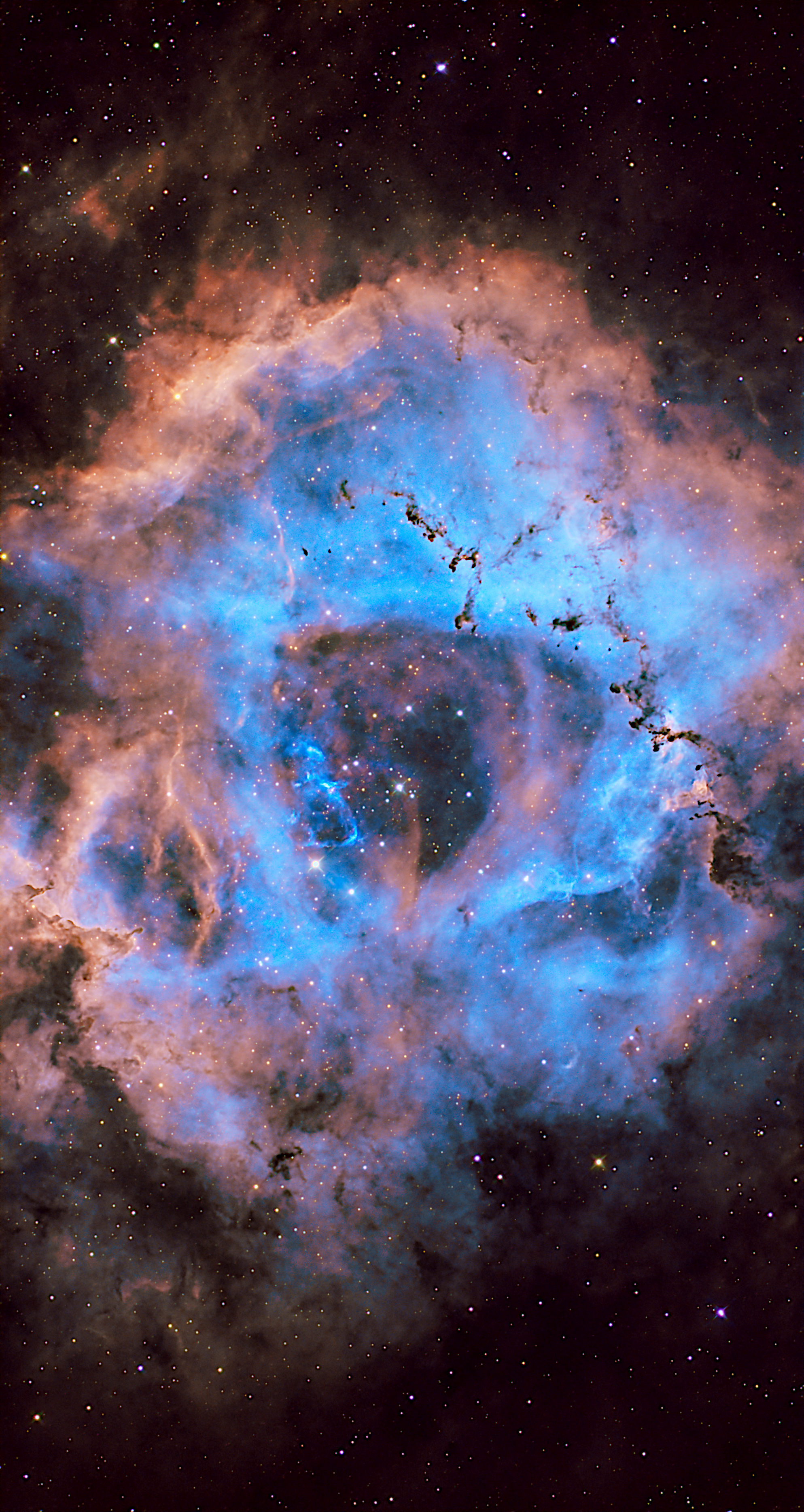
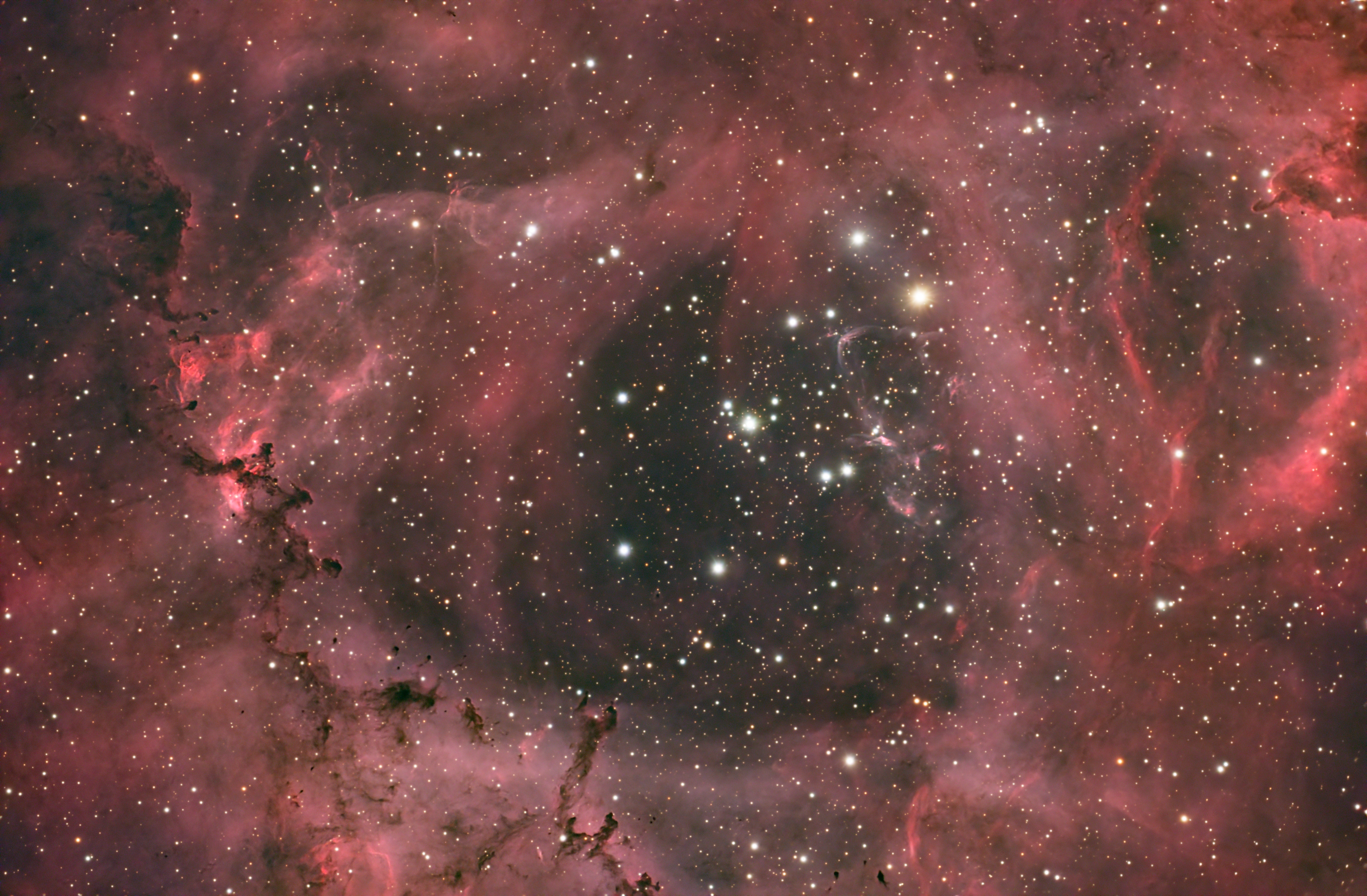
The Rosette is a massive star-forming region that looks like a giant red flower in space. At its center lies the open cluster NGC 2244, composed of incredibly hot, young stars. These stars are the 'engine' of the nebula; their intense radiation pressure has blown a central hole in the gas, creating the 'eye' of the rose. The petals are filled with intricate dark filaments known as Bok globules—dense knots of dust and gas where new solar systems are currently condensing. The entire complex is estimated to be around 130 light-years across.
Imaging Challenges
- • Scale and Detail: Because it is so large, it is easy to capture the 'shape' but hard to resolve the 'texture.' Use sharpening tools to bring out the fine, hair-like dust filaments.
- • Color Grading: The Rosette is a favorite for the Hubble Palette (SHO). The challenge is achieving a smooth transition from the golden outer petals to the cyan/blue core.
- • Saturation: It is a very bright nebula; it’s easy to over-saturate the reds (in Ha) to the point where you lose the delicate structures inside the petals.
The stars in the central cluster (NGC 2244) are only about 4 million years old—infants in galactic terms.