A Celestial Island in the Milky Way
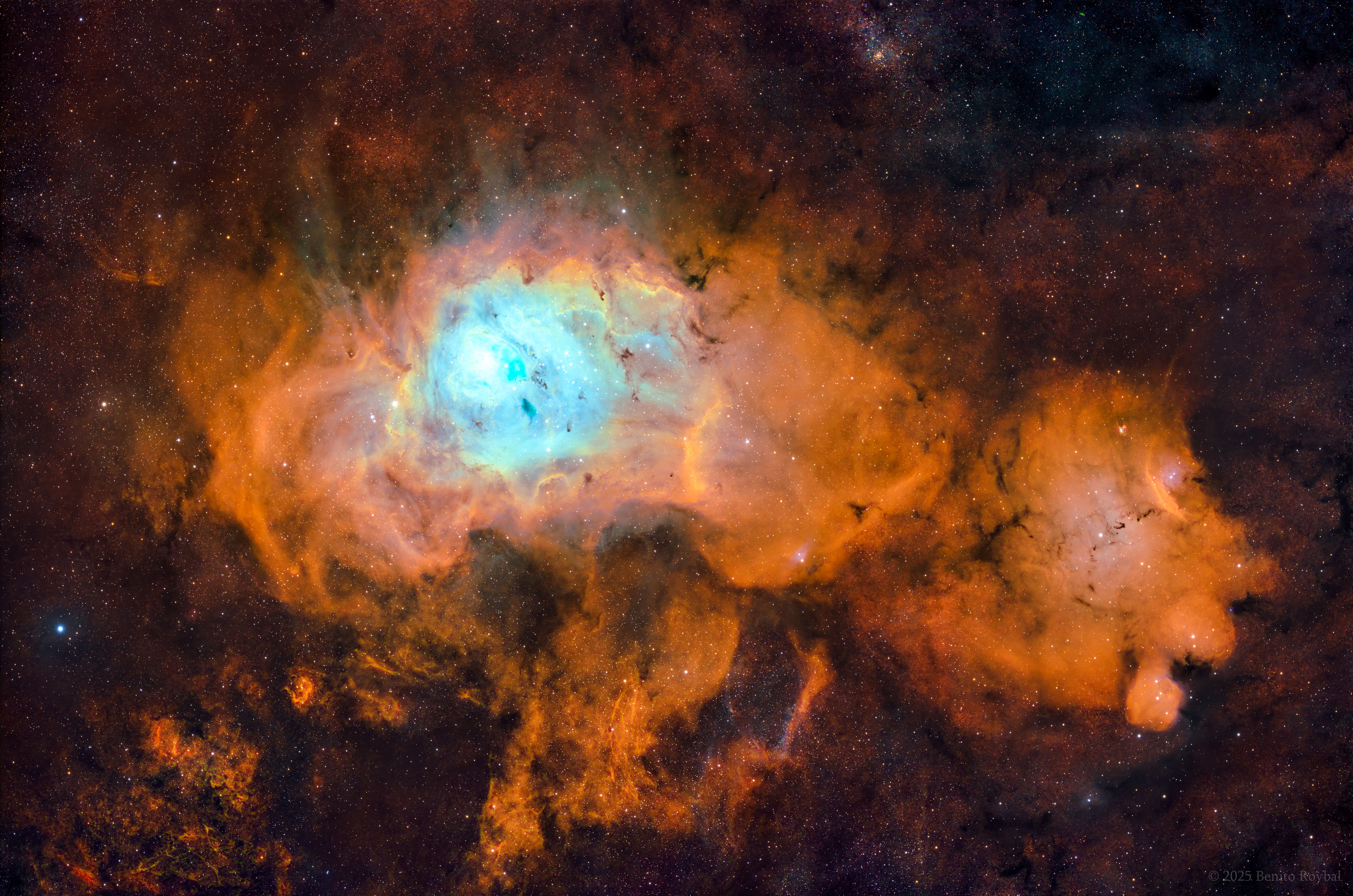

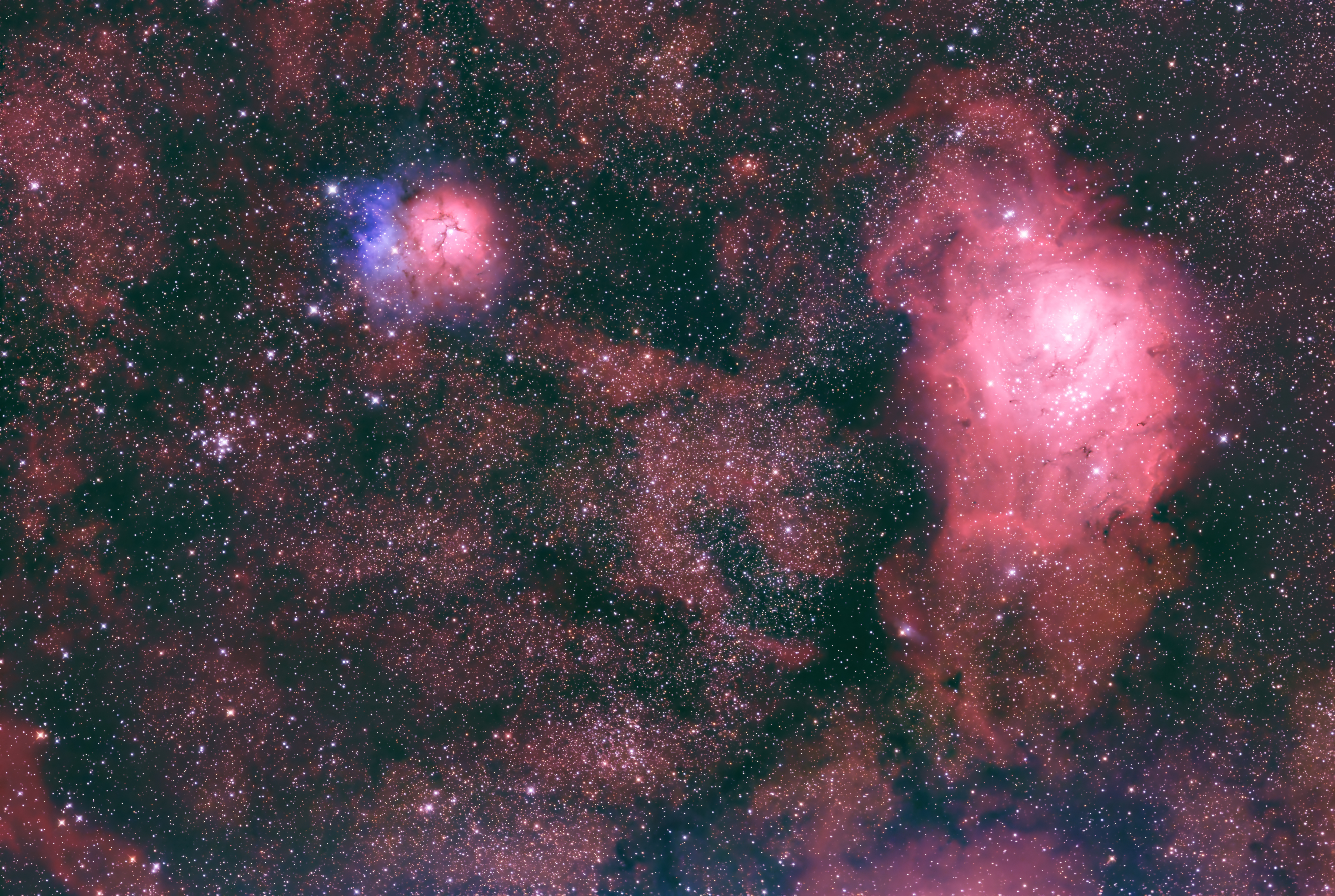
Messier 8 is a giant interstellar cloud and an active star-forming region. It earned its name from the wide, lagoon-like dust lane that cuts through the center of the glowing gas. At its heart lies the 'Hourglass Nebula'—a region of intense star formation powered by the massive star Herschel 36. This nebula is so bright that it is visible to the naked eye from dark-sky locations, appearing as a misty patch in the rich star fields of Sagittarius. It is a classic example of an HII region, where young, hot stars ionize the surrounding hydrogen, creating a brilliant red glow.
Imaging Challenges
- • Managing the massive dynamic range: The 'Hourglass' core is extremely bright and can easily blow out, while the outer filaments are delicate.
- • Dealing with the low altitude: For Northern observers, M8 stays low in the south, requiring clear horizons and short exposure windows.
- • Processing the sheer volume of stars: Being in the heart of the Milky Way, the star field can easily overwhelm the nebula detail.
The Lagoon Nebula is large enough to fit several full moons inside its boundaries and is physically over 100 light-years across.