The Cauldron of Creation
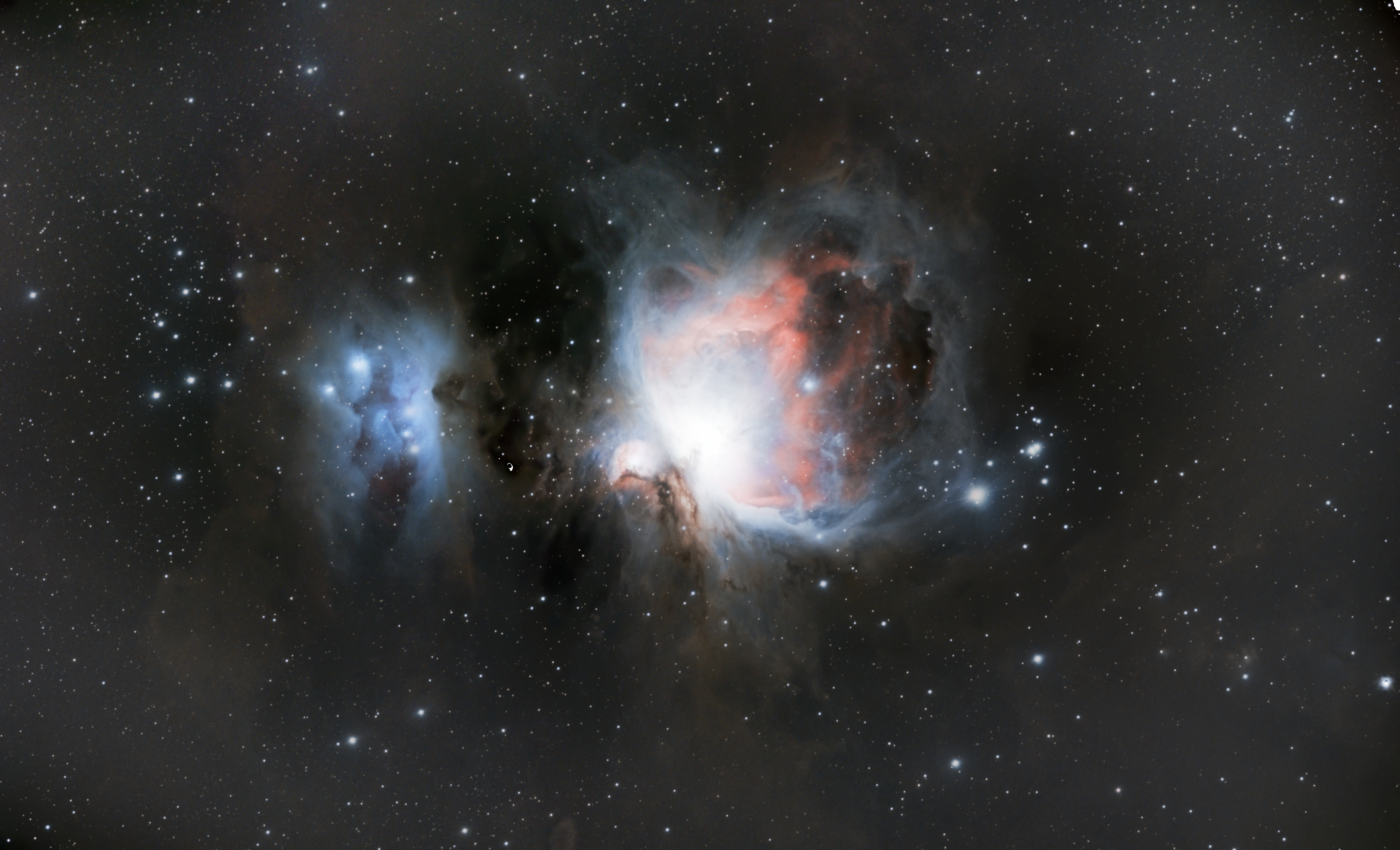
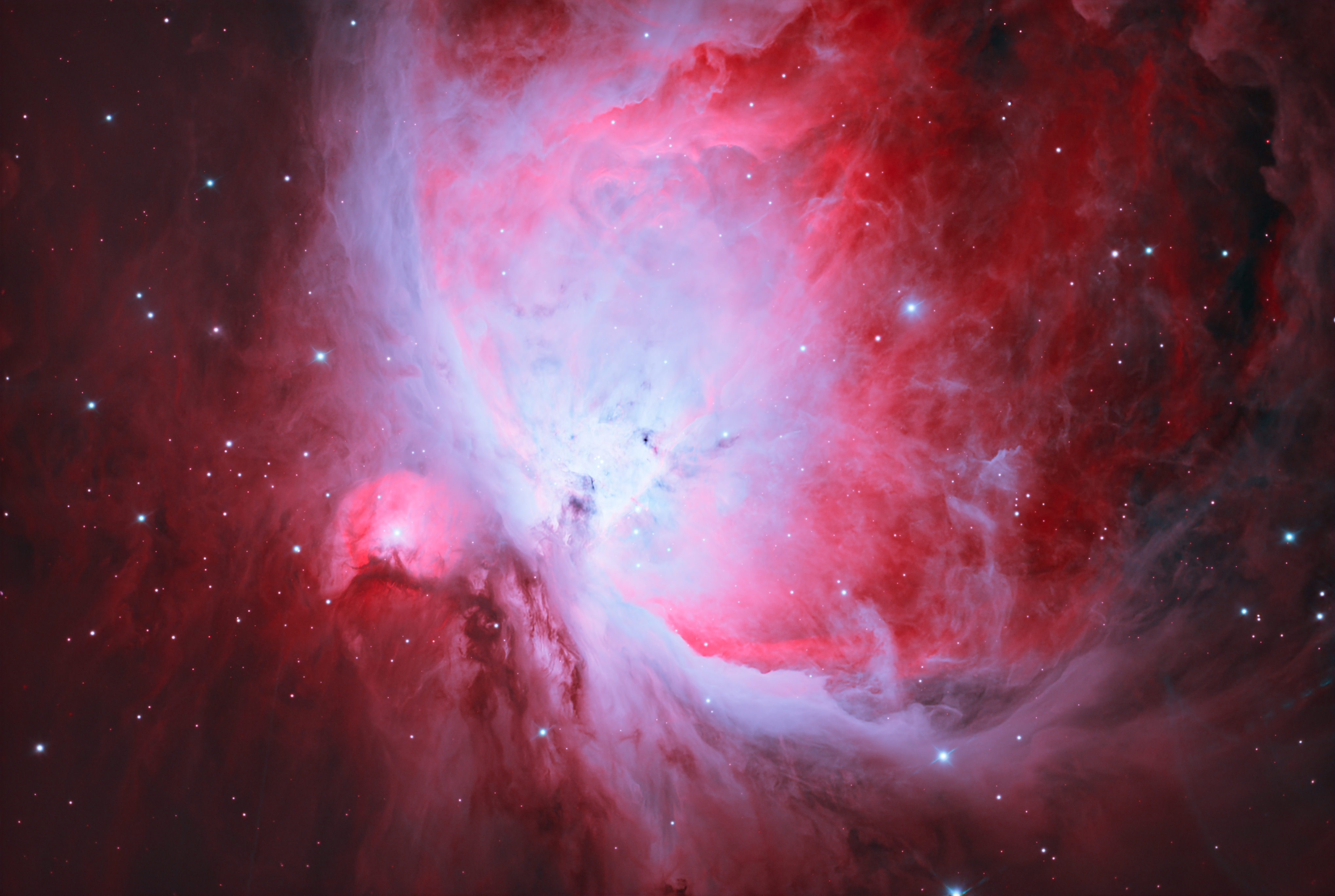
M42 is the closest region of massive star formation to Earth. It is a stellar nursery where hundreds of sun-like stars are currently being born. The nebula is visible to the naked eye as the 'fuzzy' star in Orion's Sword. At its heart lies the Trapezium—four massive, ultra-hot stars that provide the UV radiation required to light up the entire nebula. The structure is a complex mix of glowing hydrogen gas, blue reflection dust, and dark silhouettes of 'proplyds' (protoplanetary disks) where new planets are likely forming.
Imaging Challenges
- • Dynamic Range (HDR): The core is roughly 10,000 times brighter than the outer nebulosity. To see the Trapezium stars without a white 'blowout,' you must use HDR composition.
- • Color Overload: M42 contains a massive amount of OIII (teal) in the center and Ha (deep red) in the outer reaches. Balancing these without making the image look 'fake' is a delicate art.
- • Internal Detail: The 'Great Wall' and 'The Fish's Mouth' are areas of intense detail that require sharp focus and deconvolution.
The Orion Nebula is a 'bubble' in space; we are looking into the open side of a cavity carved out by the solar winds of the Trapezium stars.