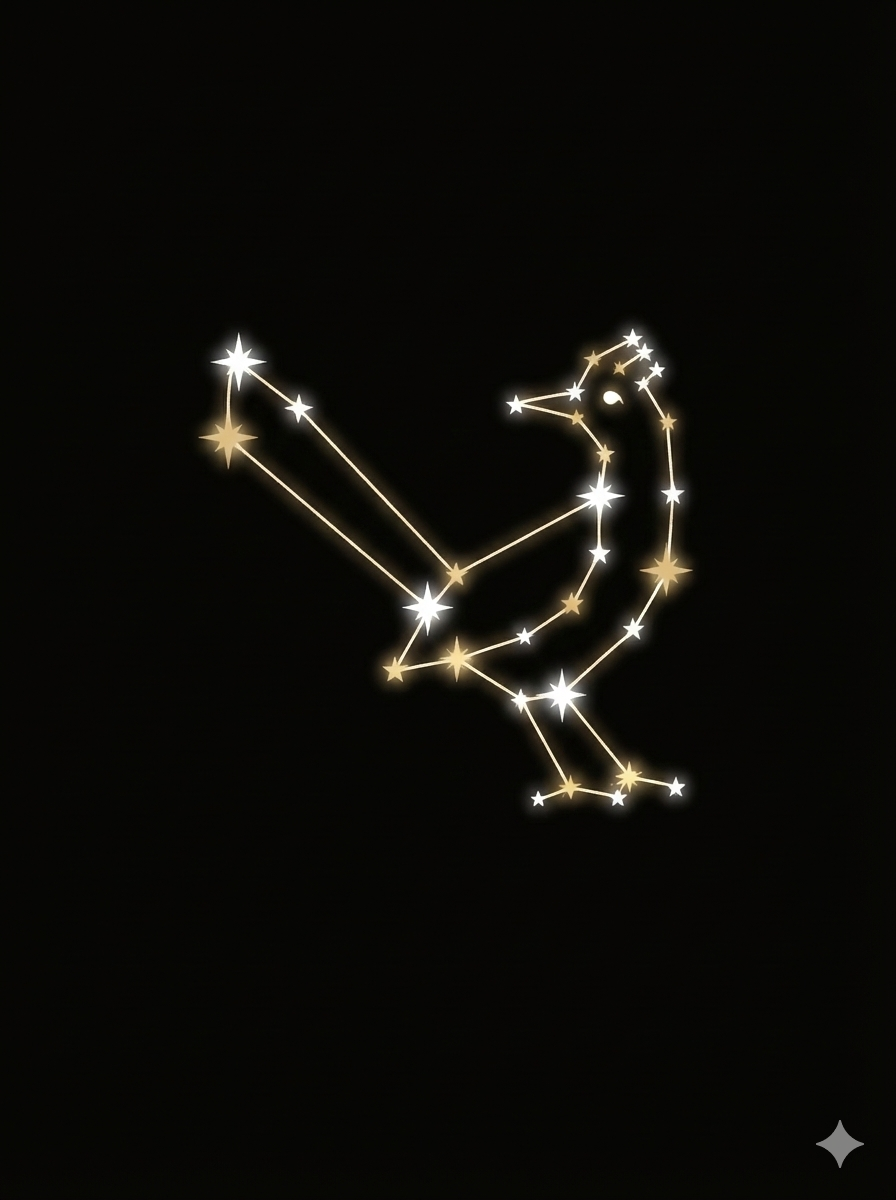
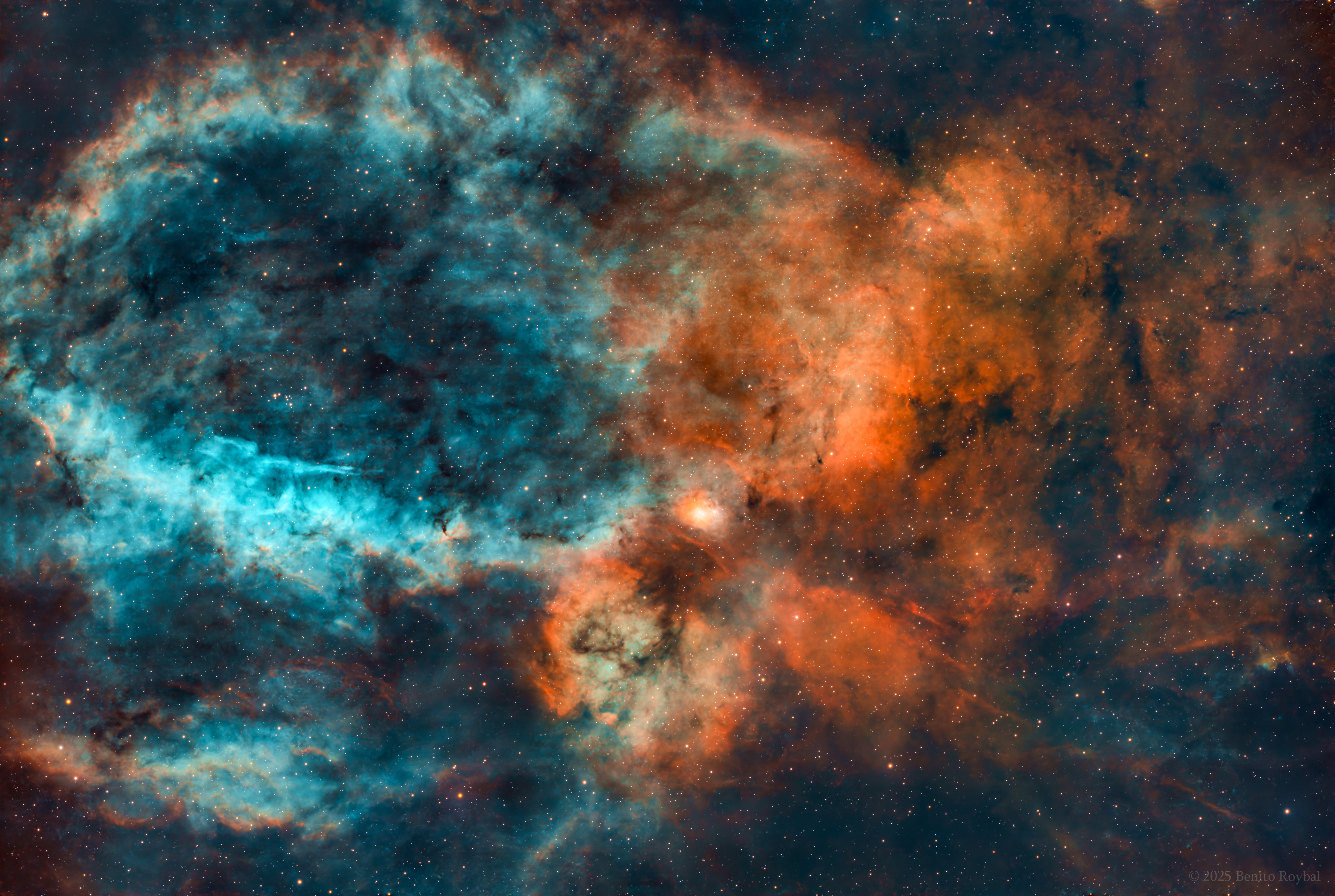
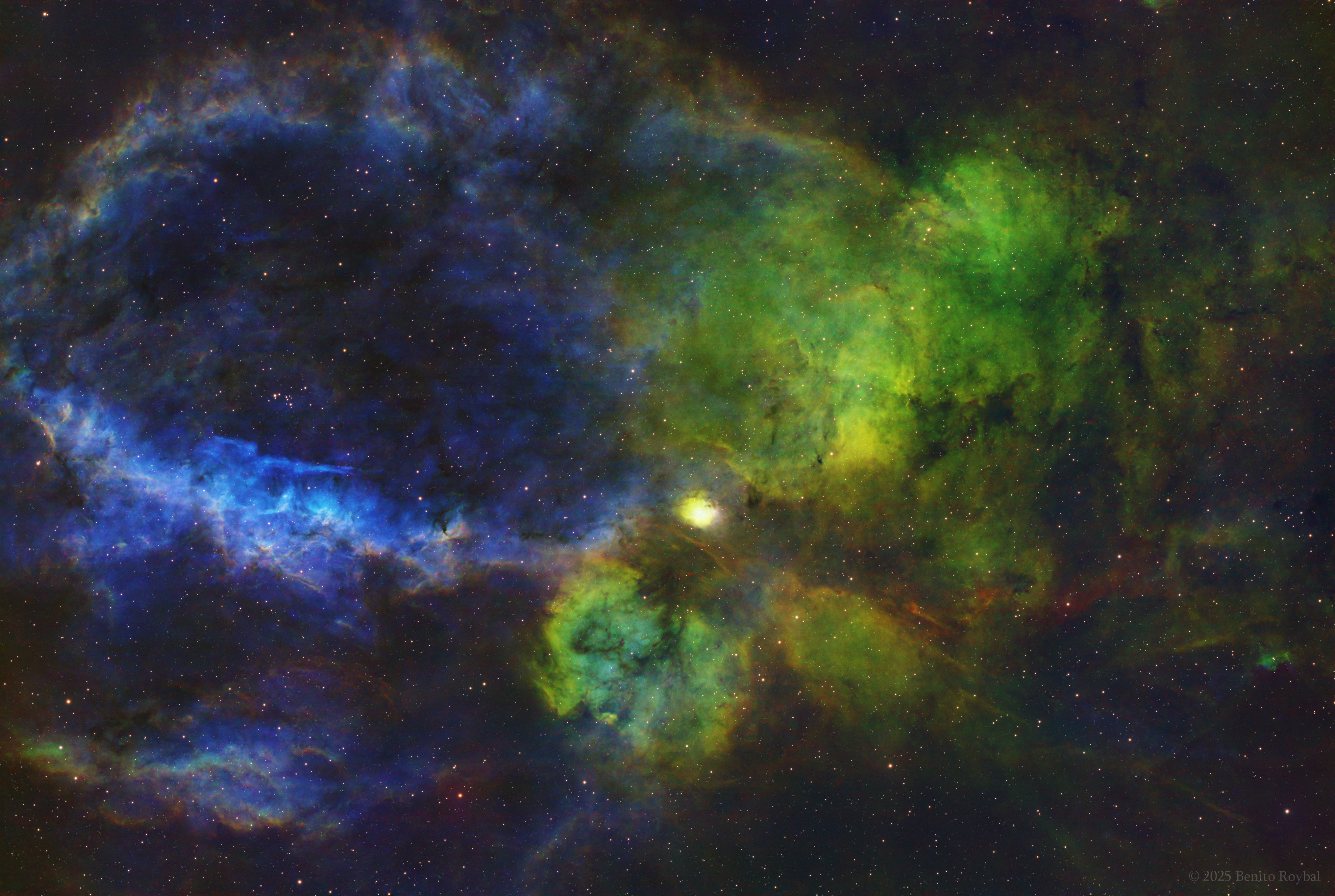
A Celestial Sculpture of Ionized Gas
Deep within the Perseus Arm of our galaxy, Sh2-157 sits on the border of Cassiopeia and Cepheus. This emission nebula is famously known as the Lobster Claw, a complex web of gas energized by the intense radiation of massive, hot stars.
Unlike more famous nebulae, the Lobster Claw is quite faint and demands significant integration time to separate the delicate "claws" from the background noise. The structure is primarily composed of Hydrogen-alpha emissions, but also contains rich pockets of Oxygen III, which provides the subtle blue-green hues seen in high-resolution narrowband portraits.
Imaging Challenges
- Signal Extraction: As a faint Sharpless catalog object, it requires high-sensitivity CMOS sensors and low-noise calibration to reveal the outer filaments.
- SHO Mapping: Balancing the Hubble Palette (Sulfur, Hydrogen, Oxygen) requires careful post-processing to ensure the "claw" remains the focal point against the star-rich background.
- Overlapping Targets: The region is crowded with other objects like the Bubble Nebula; framing is critical to isolate the Claw's unique geometry.
"To capture the Lobster Claw is to map the winds of stars. It is a reminder that the void is not empty, but filled with the architectural remains of stellar evolution."