Dust in Bloom
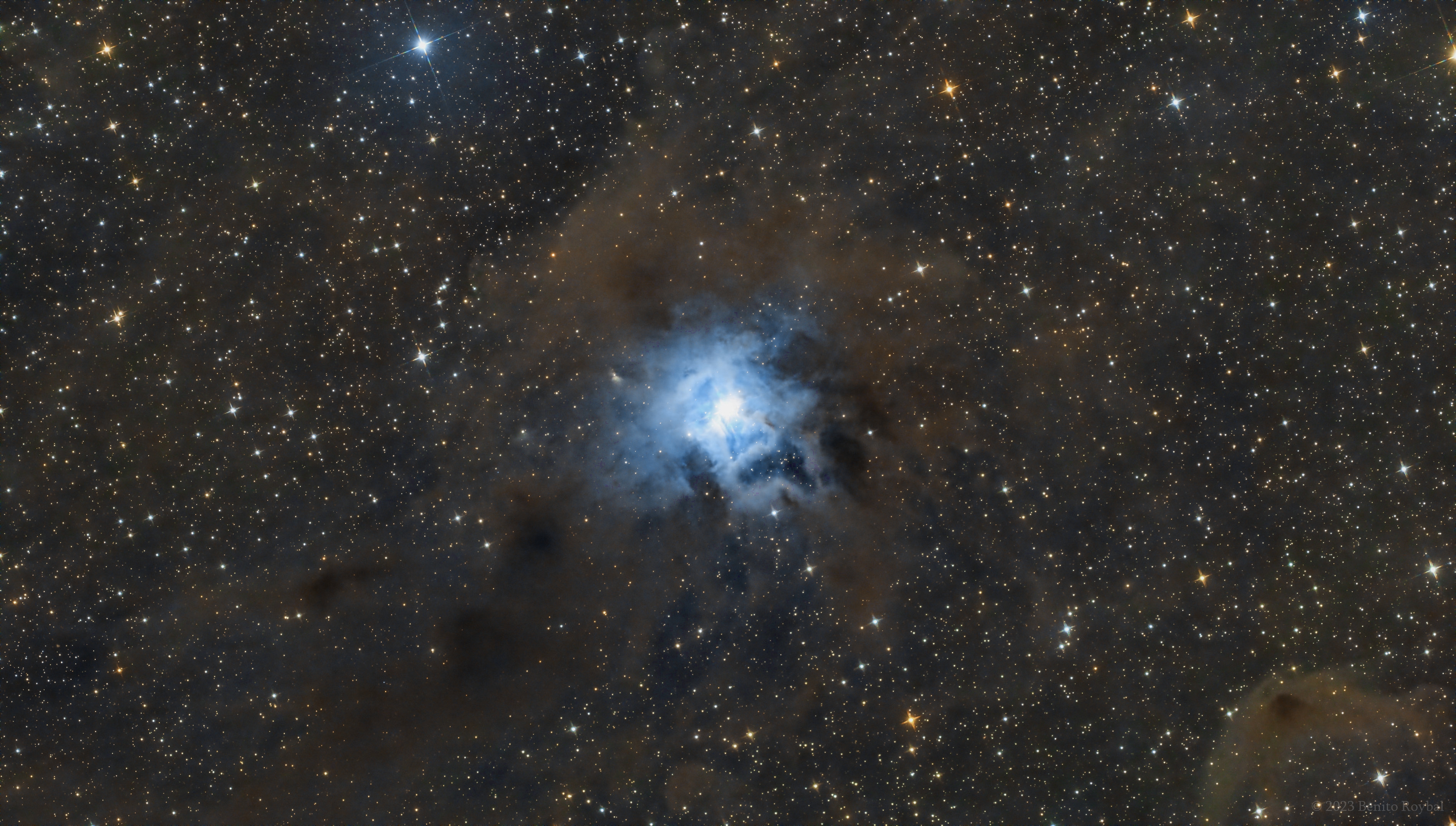
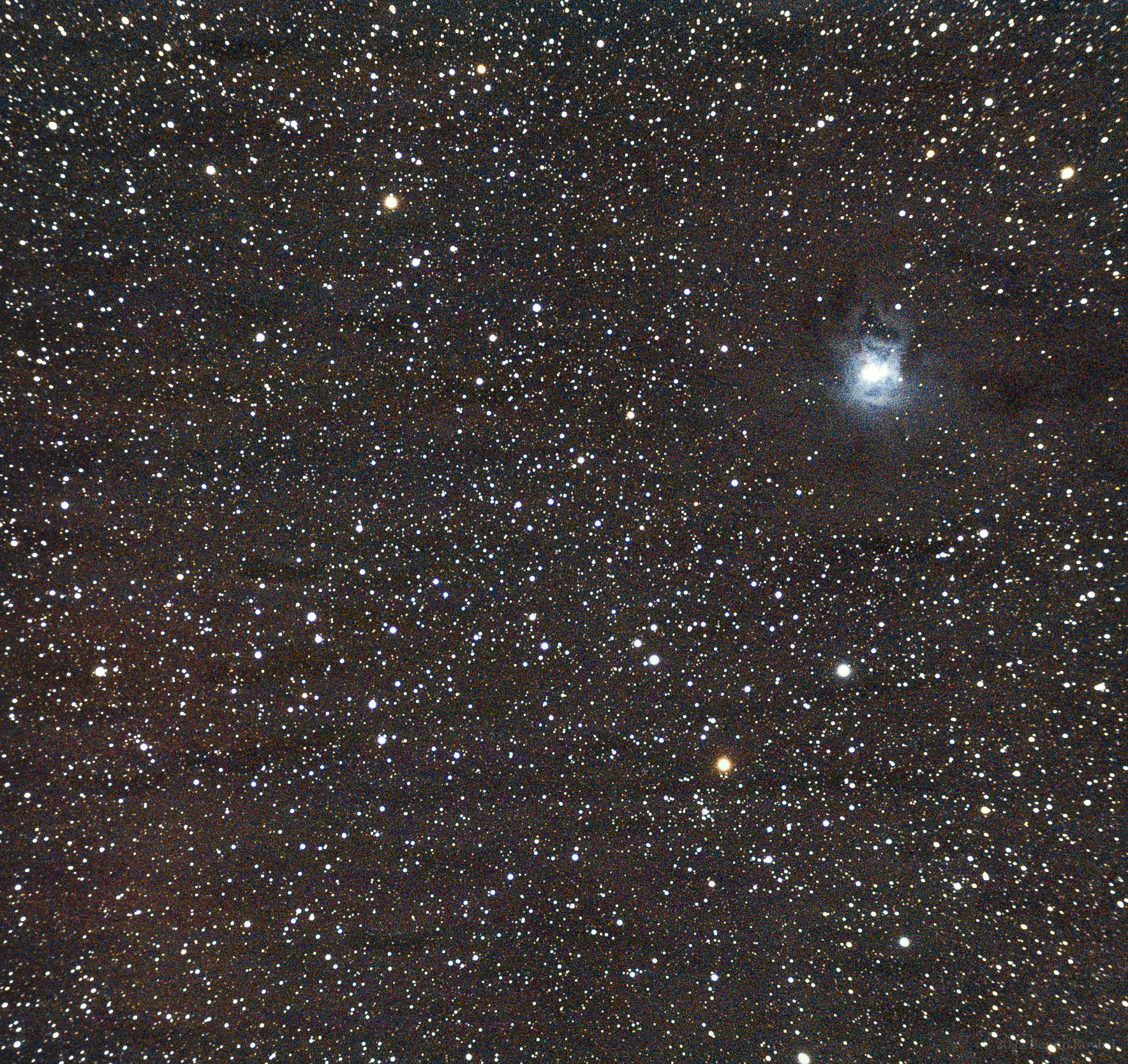
Located roughly 1,300 light-years away in the constellation Cepheus, NGC 7023 is not a single object but a cluster of stars embedded within a large, dusty nebula. The "Iris" refers to the striking blue reflection nebula that surrounds the central hot, young star, SAO 19158.
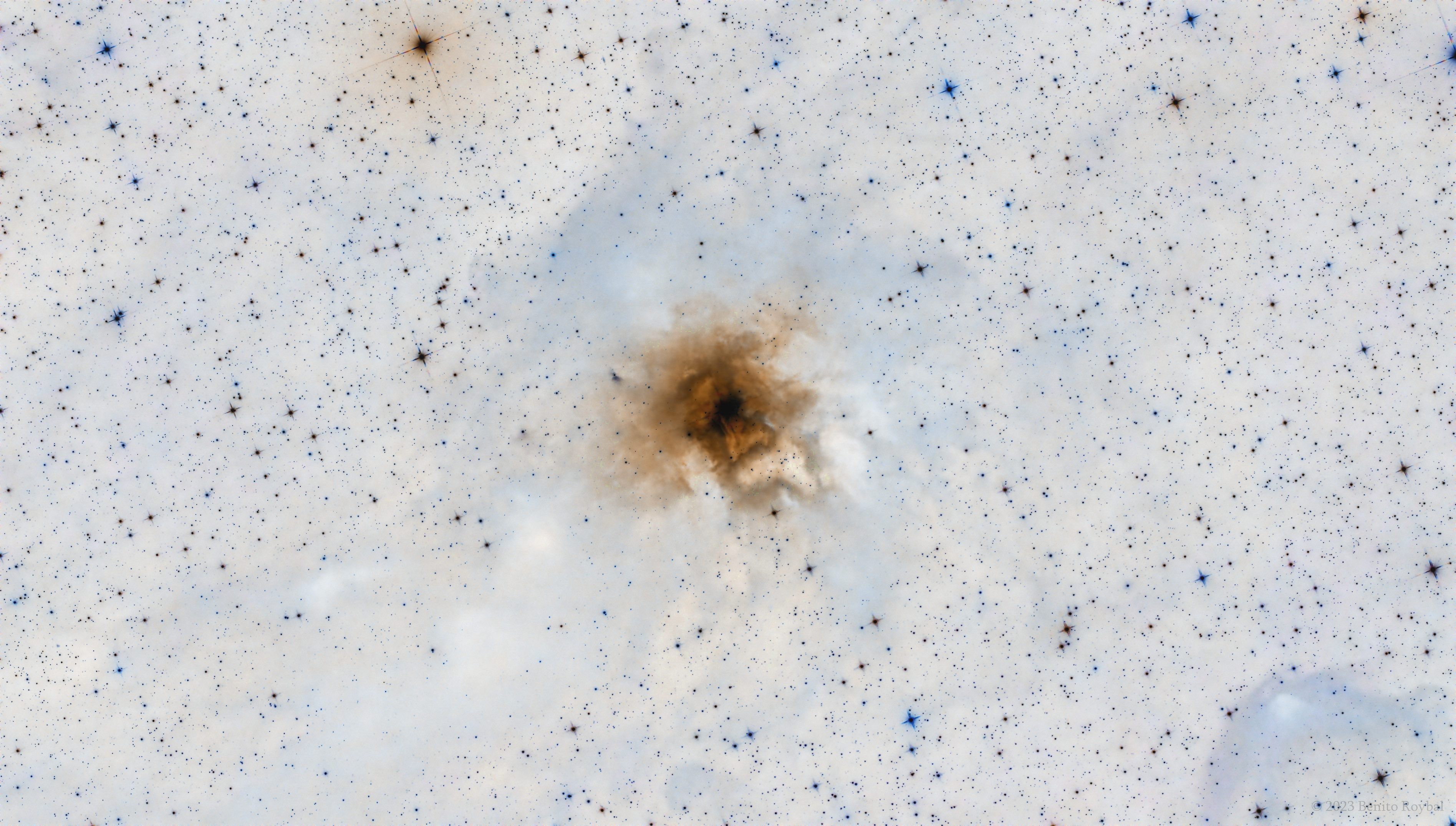
[Image of Rayleigh scattering diagram]Unlike emission nebulae that glow red from ionized hydrogen, the Iris glows blue because the dust grains are scattering the starlight. This is the same physical process that makes our sky blue on Earth. Deep exposures reveal that the brilliant blue flower sits at the center of a much larger complex of Interstellar Dust Clouds.
Imaging Challenges
- Dynamic Range: The central star is incredibly bright, requiring careful masking to protect it while stretching the faint dust.
- IFN Signal: Pulling out the non-illuminated dark dust surrounding the Iris requires extremely dark skies and long integration times.
- Color Calibration: Achieving the "true" indigo-blue of the reflection without making it look artificial or purple.
"The Iris is a rare glimpse of symmetry in a chaotic universe. While the core looks like a delicate flower, the vast lanes of soot surrounding it remind us that we are looking at the raw materials of future solar systems."