A Continent of Ionized Gas
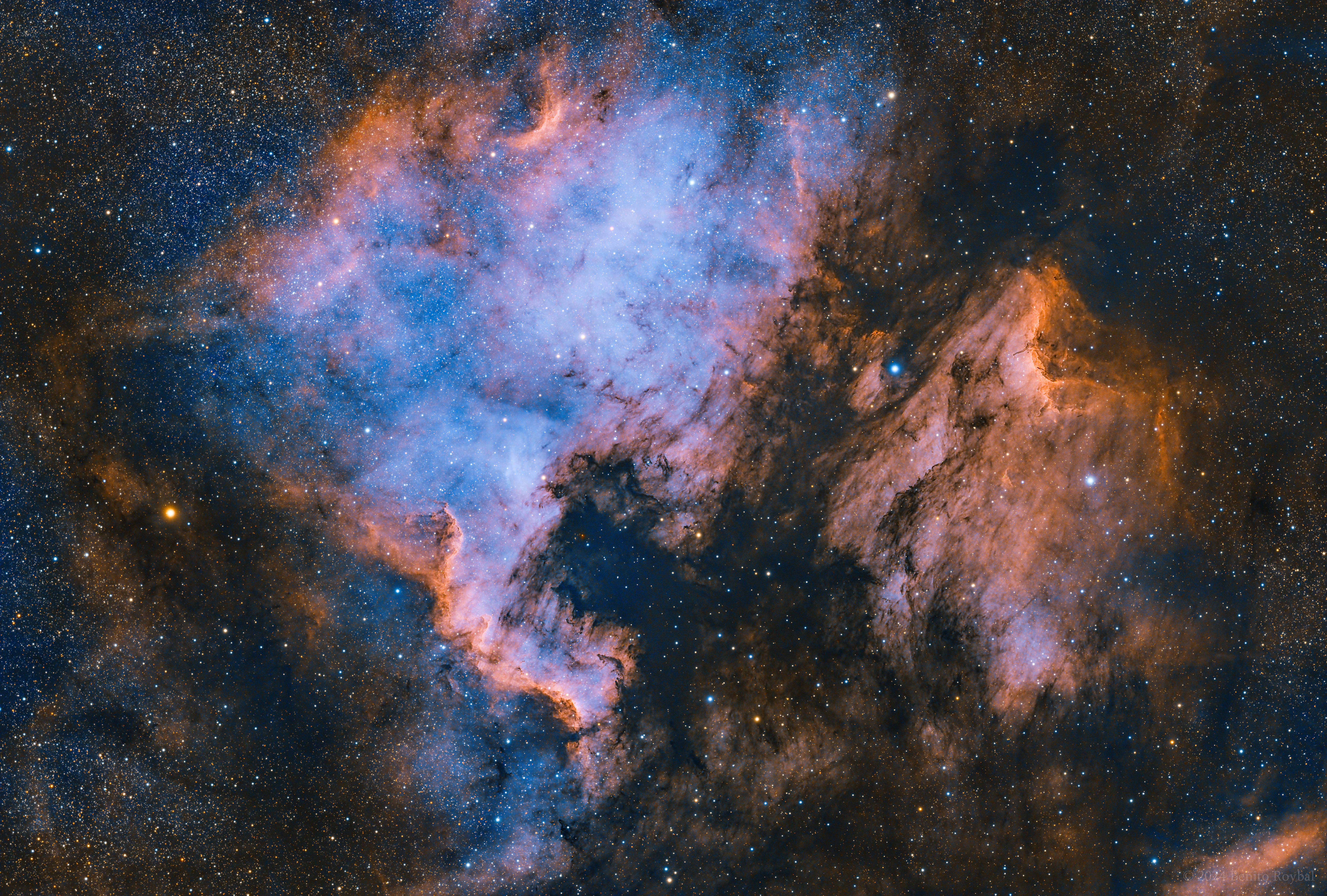
Spanning an area of the sky four times the size of the full moon, NGC 7000 is a massive emission nebula in the constellation Cygnus. Its uncanny resemblance to the North American continent is created by a foreground silhouette of dark, obscuring dust known as the LDN 935 nebula.
This region is part of the same interstellar cloud of ionized hydrogen as the nearby Pelican Nebula. The most dramatic feature, the Cygnus Wall (representing Mexico and Central America), is a hotbed of star formation, where high-energy radiation from massive stars is eroding the cold molecular gas into towering pillars and ridges.
Imaging Challenges
- Scale: Due to its immense size, a short focal length refractor or a mosaic is required to capture the full structure.
- Processing Contrast: Separating the deep reds of the H-Alpha from the dark dust lanes of the "Gulf of Mexico" requires careful histogram stretching.
- Star Density: Located in the heart of the Milky Way, the star count is overwhelming; starless processing (StarNet/StarTerminator) is essential for revealing the faint gas.
"The Cygnus Wall is a cosmic landscape of monumental scale. Within its glowing ridges, the pressure of starlight is currently collapsing gas clouds to ignite the next generation of suns—a process that has been occurring here for millions of years."