
Ionized Filaments in Perseus
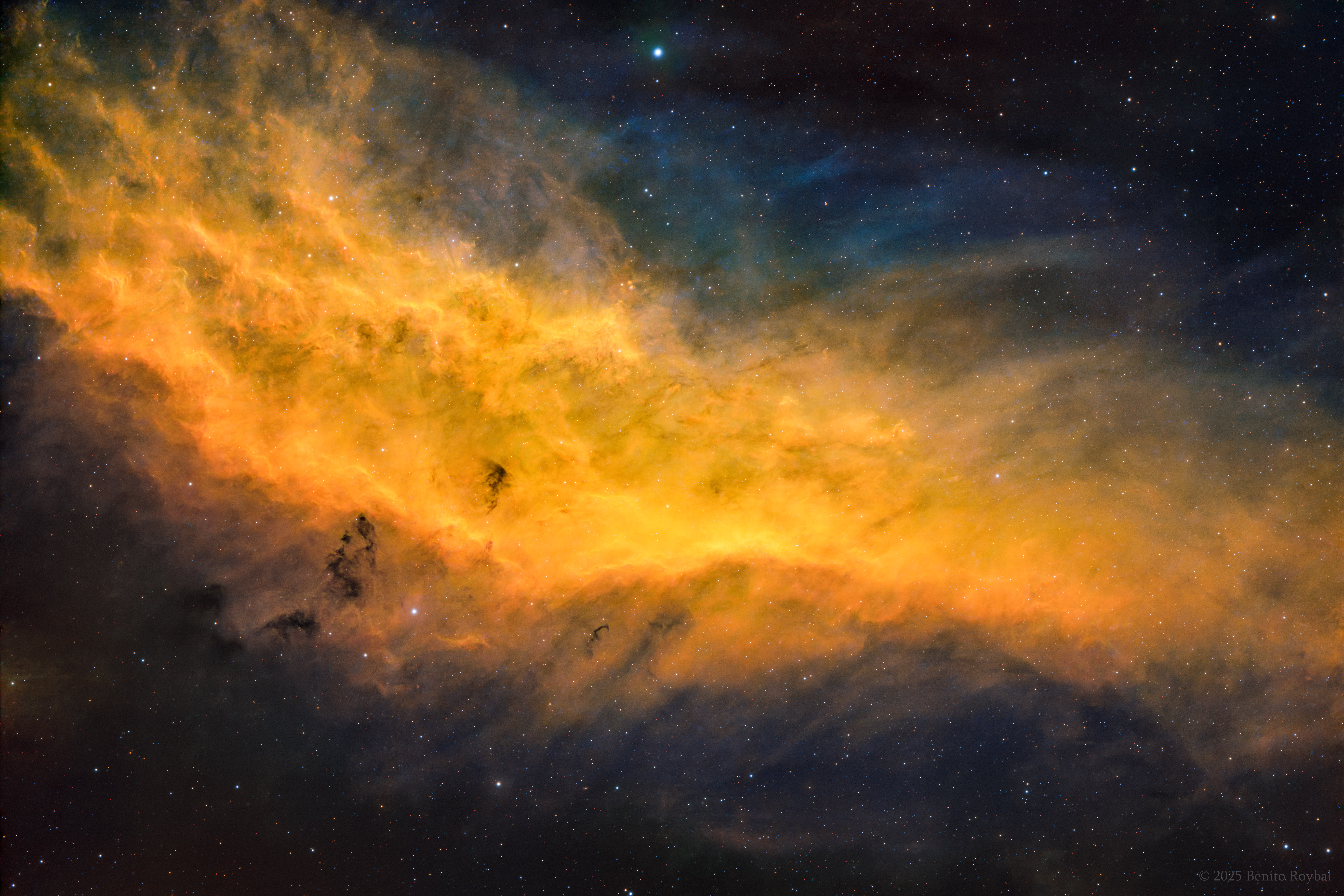
Located 1,000 light-years away, NGC 1499 is a classic example of an HII region. Its distinctive shape is not just a coincidence of perspective, but a result of the radiation pressure from Xi Persei, a massive O-type star.
As the star emits high-energy ultraviolet photons, it strips electrons from hydrogen atoms in the surrounding gas. When these electrons recombine with protons, they release energy in the form of a deep red glow—the Hydrogen-alpha line. Despite its size, its low surface brightness makes it a ghost to the naked eye, requiring narrowband filters to reveal its delicate, filamentary textures.
Imaging Challenges
- Surface Brightness: Spreads its light over a vast area, making it prone to being washed out by gradients or moonlight.
- Narrowband Necessity: While broadband RGB captures the stars, the nebula itself requires deep H-alpha integration to define the "shorelines" of the gas.
- Scale: At 2.5 degrees long, it requires a short focal length or a mosaic to capture the full "California" silhouette.
"Named for its resemblance to the West Coast, NGC 1499 is a cosmic reminder of how the most massive stars in the galaxy sculpt their environment, turning invisible gas into a masterpiece of light and shadow."