A Mirror to the Milky Way
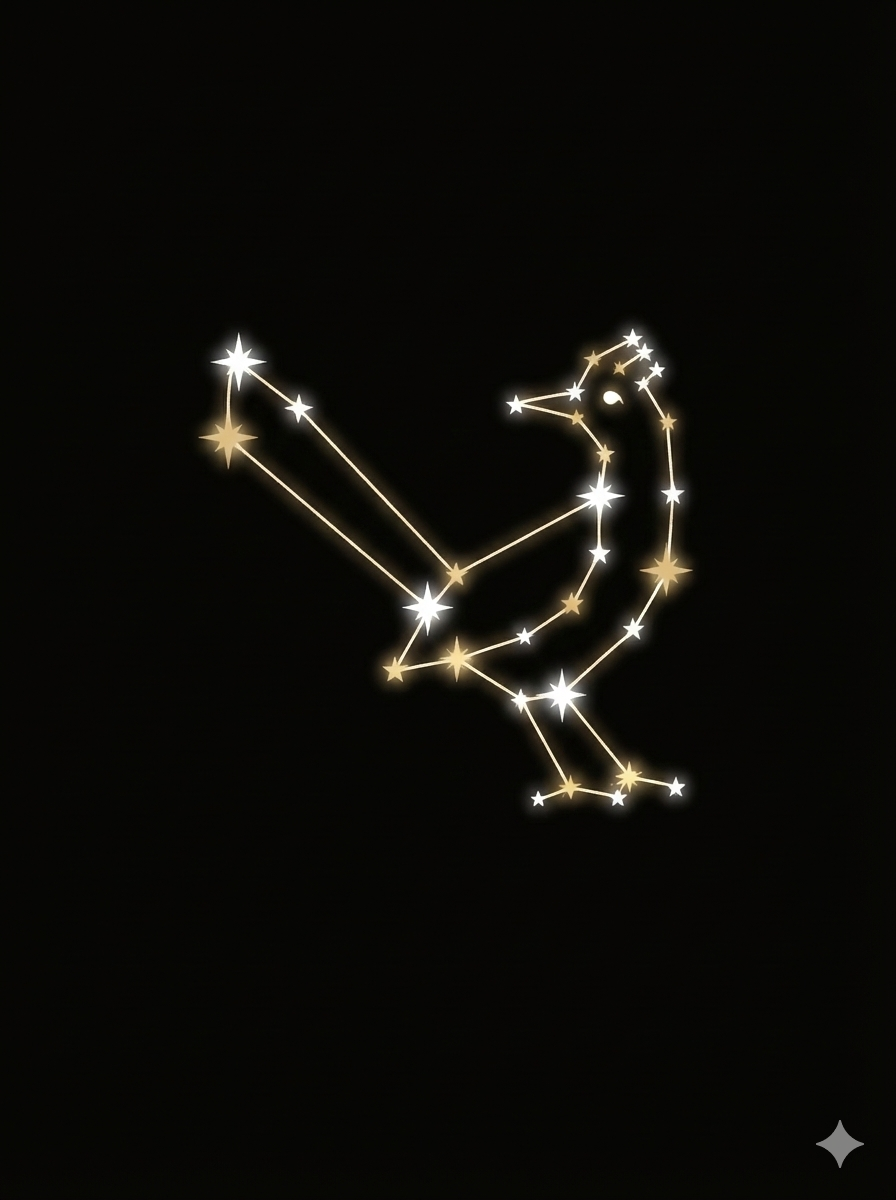
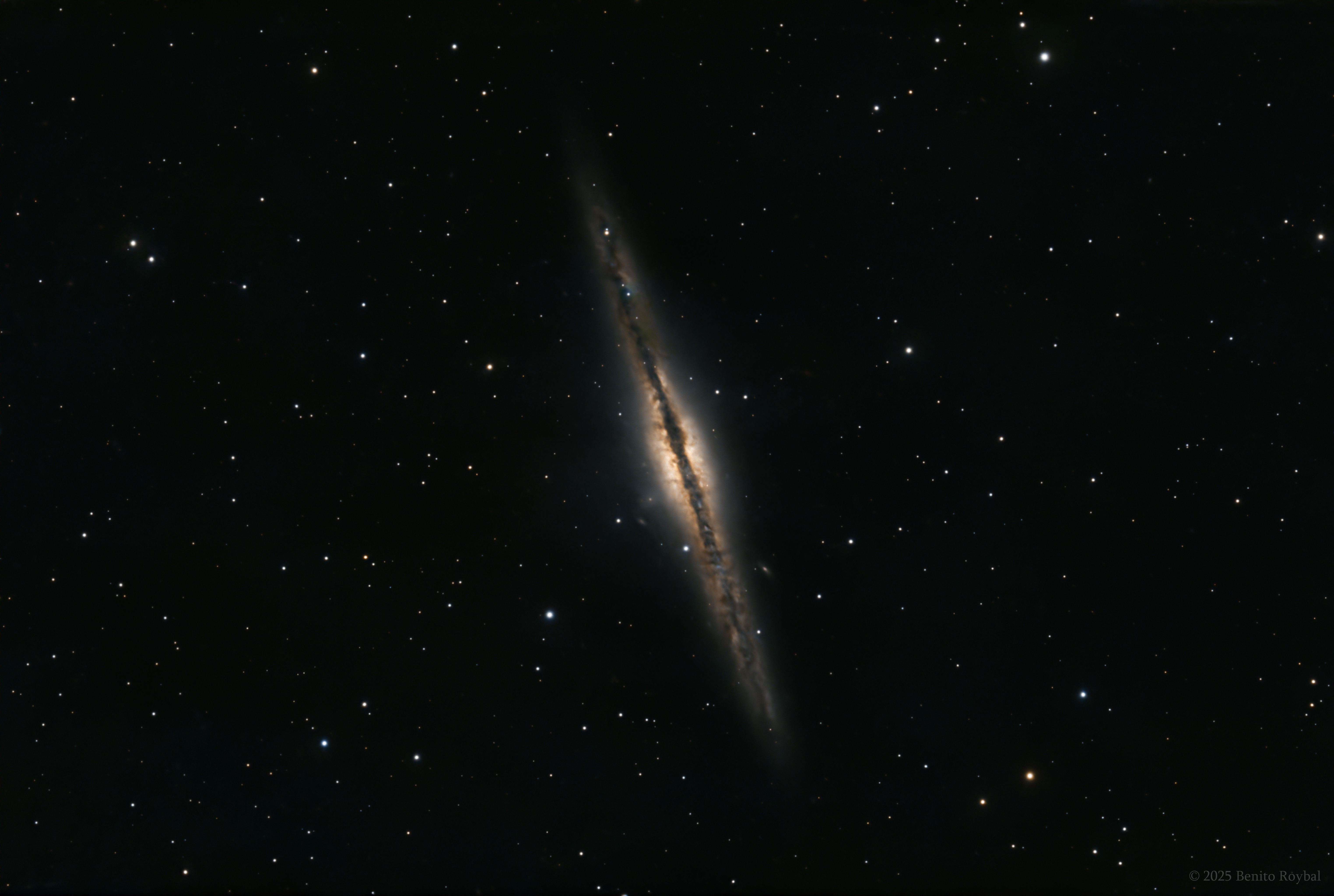
Located 30 million light-years away in the constellation Andromeda, NGC 891 provides a breathtaking "edge-on" view of a spiral galaxy. Because its galactic plane is tilted almost 90 degrees to our line of sight, we see it not as a spiral, but as a thin needle of starlight bisected by a chaotic, jagged dust lane.
Astronomers view NGC 891 as a proxy for our own Milky Way. From this perspective, we can observe the "thickness" of a galactic disk and the way massive clouds of dust and gas settle into a thin mid-plane. The complex filaments of dust visible here are the result of "galactic fountains"—gas being blown out of the disk by supernova explosions and then raining back down.
Imaging Challenges
- Dust Lane Contrast: The central dust lane is the primary feature. Resolving its "moth-eaten" structure requires high-quality luminance data and careful contrast management to avoid washing out the delicate dark filaments.
- Atmospheric Seeing: Because the galaxy is so thin, bad atmospheric "seeing" can quickly blur the disk. Capturing the sharp transition between the stars and the dust requires steady nights.
- Faint Halo: Deep exposures reveal a faint halo of light surrounding the disk. Pulling this out without introducing noise requires significant total integration time.
"To look at NGC 891 is to see our own home from the outside. It is a reminder that we live within a vast, thin disc of light, separated from the void by walls of interstellar soot."