A Neighborhood Giant
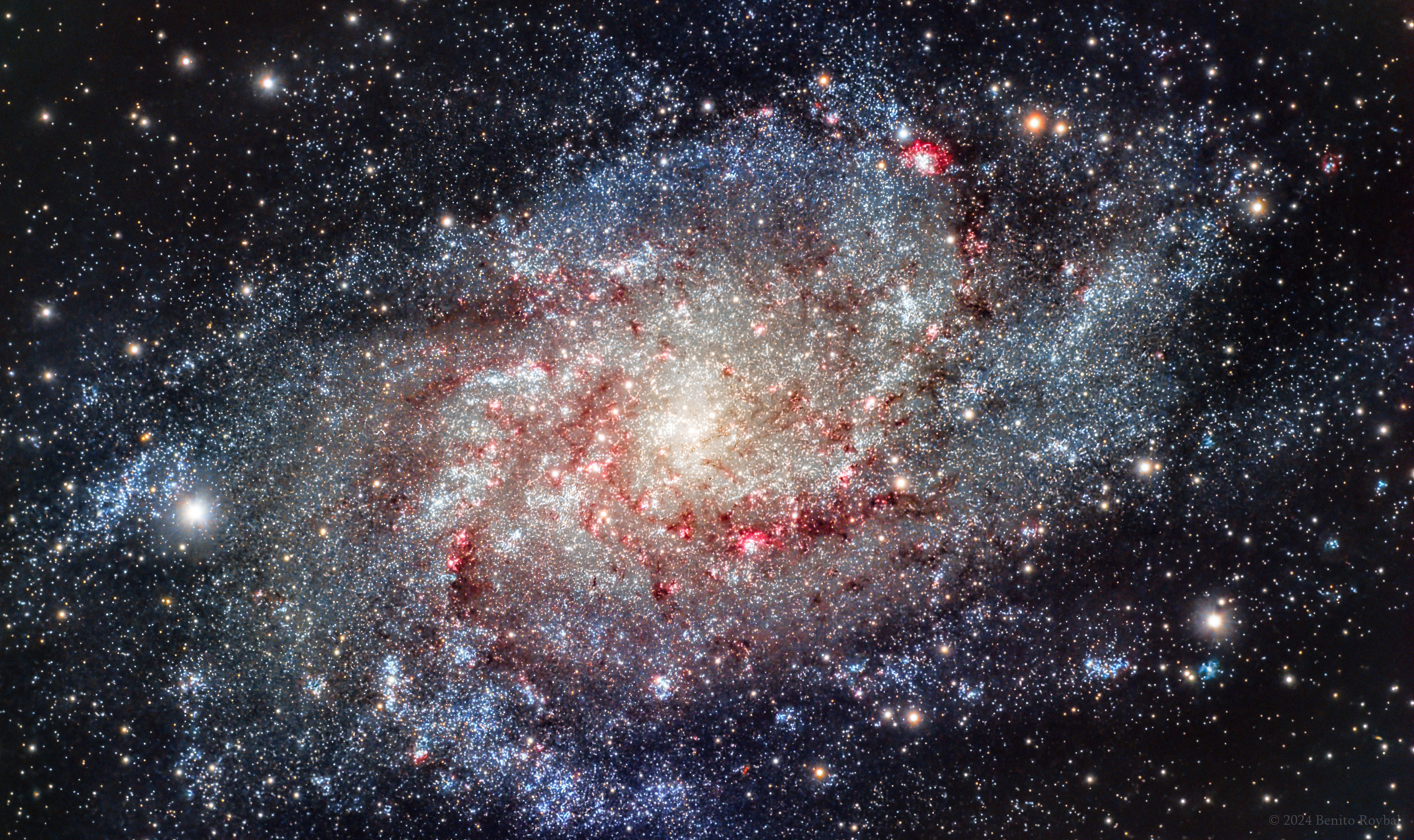
At approximately 2.7 million light-years away, M33 is one of the closest spiral galaxies to Earth. While it is smaller than Andromeda, it is often preferred by astrophotographers because of its "face-on" orientation, which allows us to peer directly into its sprawling star-forming factories.
The galaxy is famous for NGC 604, one of the largest known HII regions in the entire Local Group. This massive nebula is visible even in this wide-field view as a distinct pink knot. M33 lacks a central bulge, giving it a more "flocculent" or patchy appearance compared to M31 or M81, emphasizing its chaotic and vibrant nature.
Imaging Challenges
- H-Alpha Pockets: To do M33 justice, H-alpha data must be blended with RGB. This reveals the "hidden" nebulae within the galaxy that aren't fully visible in standard broadband light.
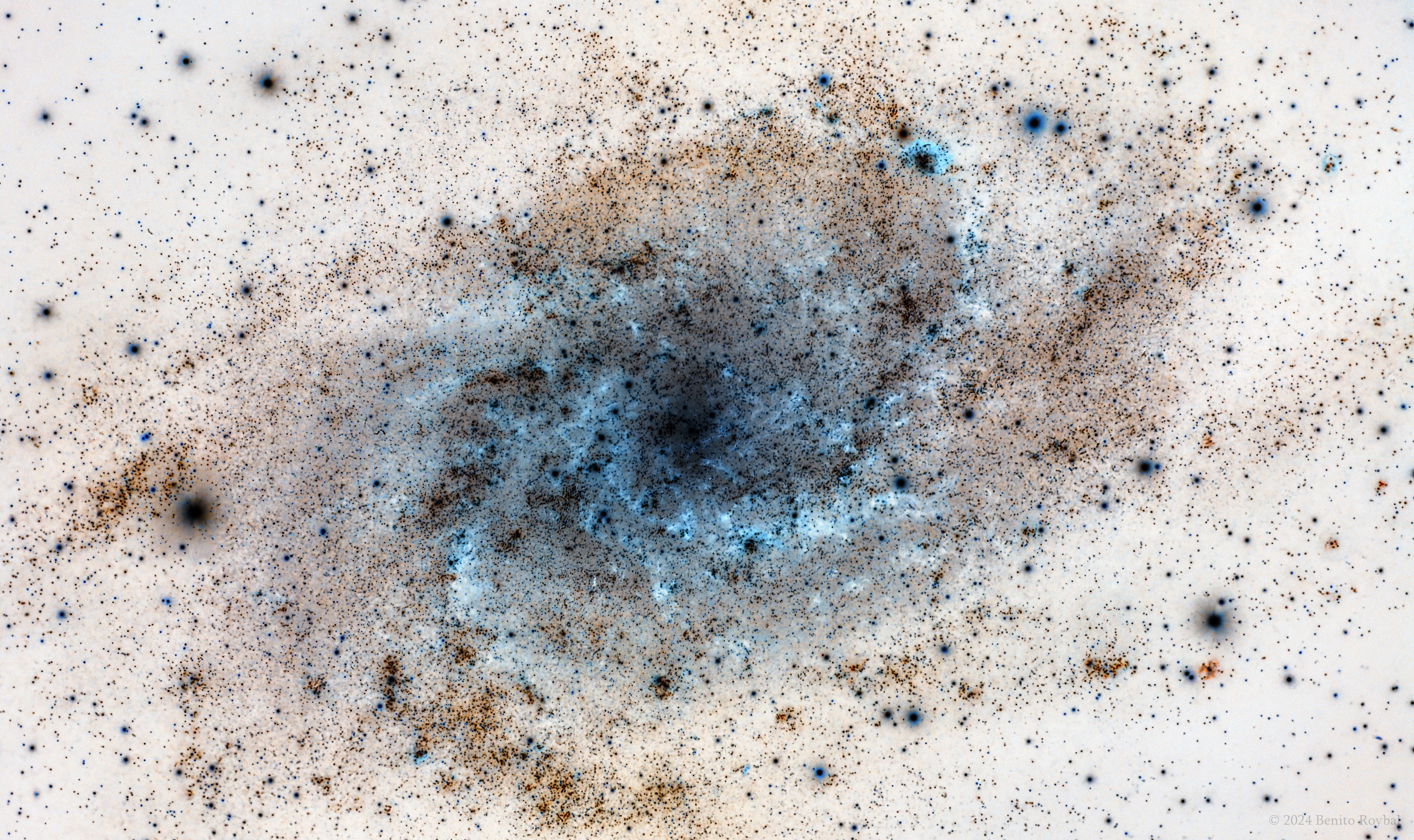
- Low Surface Brightness: Despite its size, M33 is notoriously faint. Capturing the very outer reaches of its arms requires exceptionally dark skies and deep exposure depth.
- Star Resolution: Because it is so close, a high-resolution setup like the Askar 120APO can resolve individual star clusters and giant stars within the galaxy's arms.
"M33 is a treasure map of stellar evolution. Within its blue arms lie the pink nurseries where the next generation of suns is currently being born."